
Jean Cocteau
Boccara tapestry selection by Didier Marien
Tapestries by Jean Cocteau in the Boccara Collection
ORIGINS & VISION
About the Artist
A Life of Perpetual Metamorphosis
Jean Cocteau (1889–1963) was perhaps the most versatile creative mind of the 20th century. Born into a wealthy Parisian family, he was immersed in the arts from childhood, but his true formation occurred within the radical circles of the early 1900s. A peer to Picasso, a friend to Satie, and a mentor to the Surrealists, Cocteau moved fluidly between the theater, the novel, and the screen. He was the architect of cult cinematic masterpieces like Orphée and Beauty and the Beast, and a playwright who revitalized Greek tragedy for the modern era. To Cocteau, there was no hierarchy between the arts; whether he was directing a film or sketching a profile, he was engaged in the act of “writing” a visual language.
The Graphic Line: Drawing as Writing
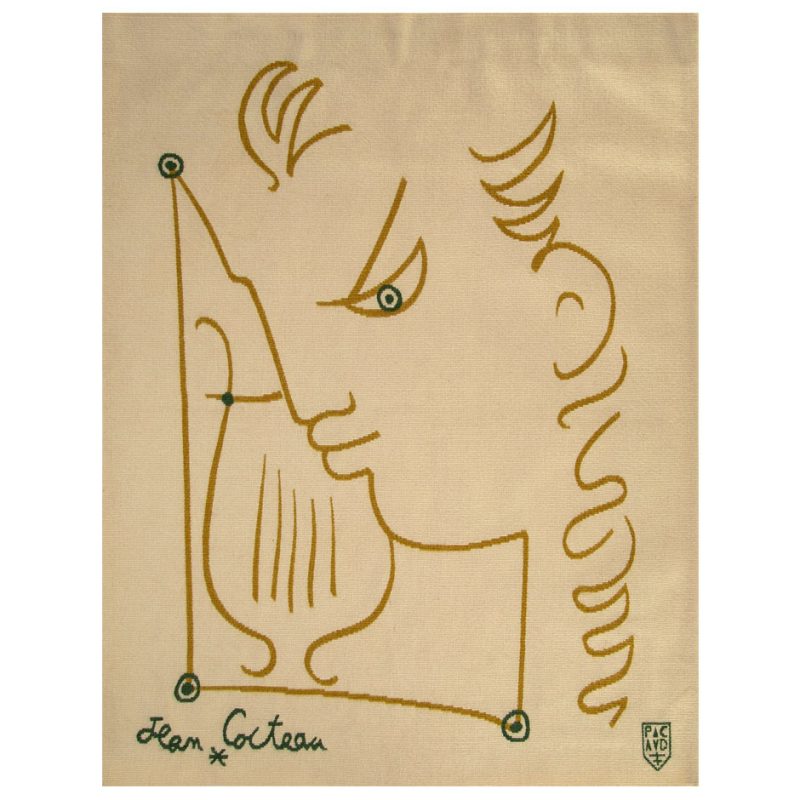
Cocteau’s visual art is defined by “The Line”—a continuous, fluid, and deceptively simple stroke that captures the essence of a face or a mythic figure. He famously stated that “to draw is to untie the knots of a piece of string,” and his drawings often possess a calligraphic quality that mirrors his work as a poet. His iconography was deeply personal yet universally resonant, frequently returning to the themes of Orpheus, angels, and the stylized profiles of the Mediterranean. This focus on clear, expressive contours made his work particularly suitable for the medium of tapestry, where the strength of a silhouette determines the success of the woven composition.
The Aubusson Revival and Atelier Raymond Picaud
In the mid-20th century, Cocteau became an ardent supporter of the “Nouvelle Tapisserie” movement, joining Jean Lurçat in the mission to restore Aubusson to its former glory. He viewed the tapestry as a “mural of wool,” a medium that combined the warmth of the home with the monumental scale of public art. To realize his visions, he collaborated with Atelier Raymond Picaud, a workshop renowned for its technical excellence and its history of partnering with the era’s leading modernists. Picaud was a master of the “low-warp” technique, capable of translating Cocteau’s delicate, ink-like lines into the structural weight of the loom with absolute fidelity.
A Legacy of Plastic Poetry
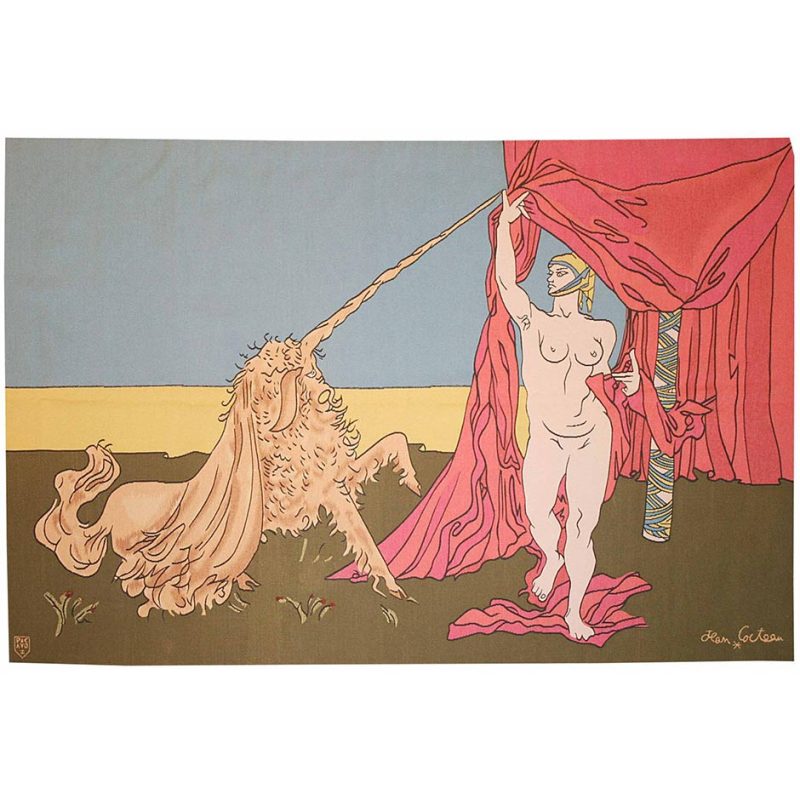
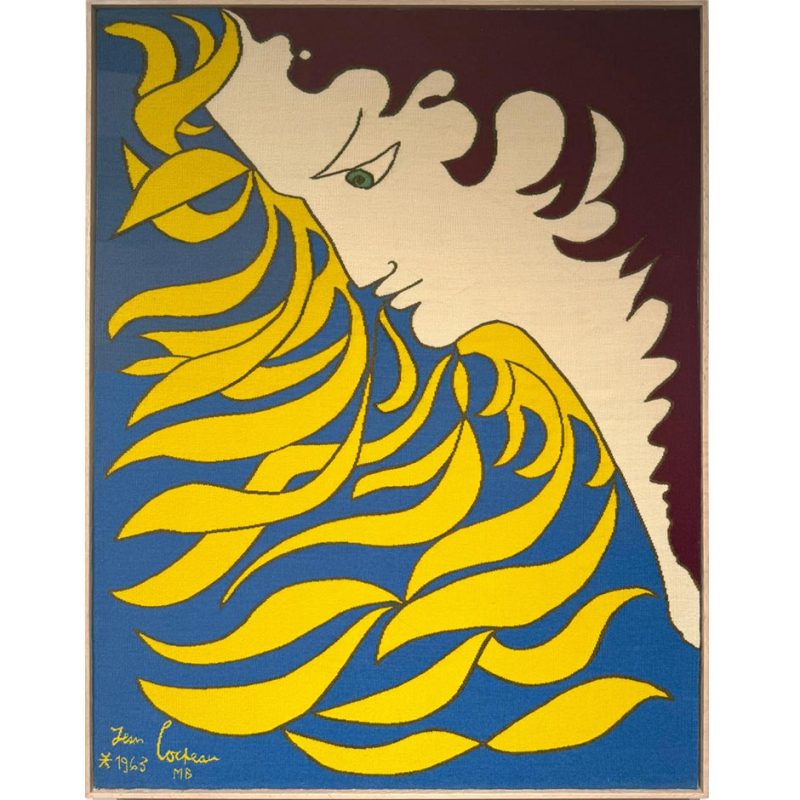
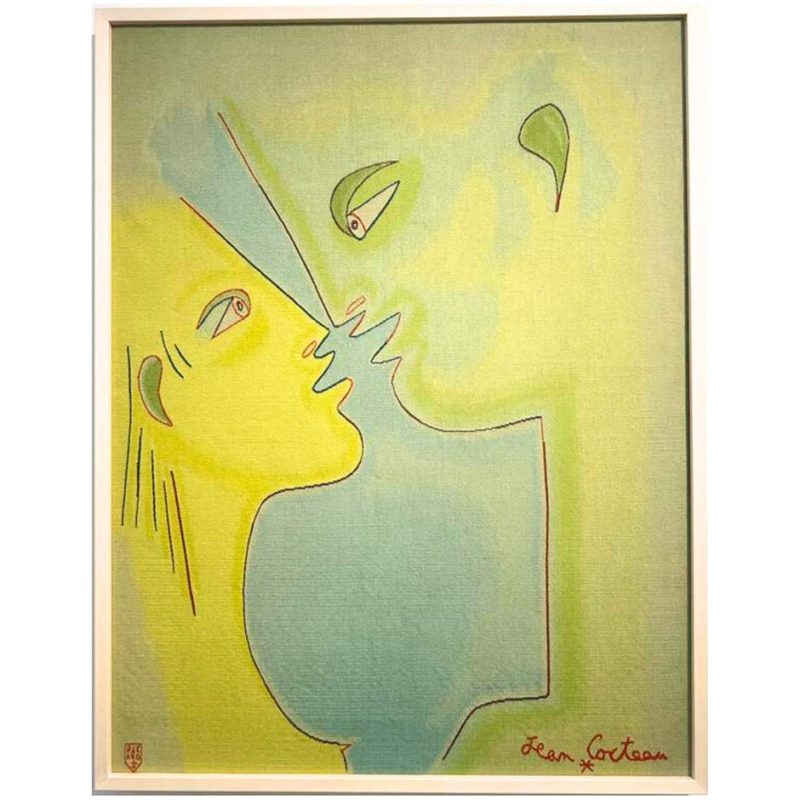
The two tapestries in the Boccara collection are definitive examples of Cocteau’s ability to simplify complex narratives into elegant, graphic symbols. Through the expertise of Raymond Picaud, the subtle variations in his line work are preserved, allowing the texture of the wool to add a new dimension of light and shadow to his designs. Cocteau was a member of the Académie Française and remains one of the few artists to have a dedicated museum in Menton designed to celebrate his multidisciplinary “plastic poetry.” Today, his woven works are sought after as rare artifacts of a period when the avant-garde sought to make art a tactile, living presence in the modern world.