
Pierre Alechinsky
Boccara tapestry selection by Didier Marien
Tapestries by Pierre Alechinsky in the Boccara Collection

ORIGINS & VISION
About the Artist
The CoBrA Rebellion and the Spirit of Spontaneity
Pierre Alechinsky (b. 1927) emerged in the late 1940s as a central force in the CoBrA movement—an acronym for Copenhagen, Brussels, and Amsterdam—which sought to dissolve the rigid boundaries of artistic tradition. Alongside artists like Karel Appel and Asger Jorn, Alechinsky championed a “post-war rebellion” that prioritized spontaneity, free expression, and the primitive power of folk and children’s art. His early skill in typography and book illustration provided him with a unique graphic foundation, but it was within the CoBrA circle that he developed his distinctive biomorphic forms and vibrant, gestural lines. This period instilled in him a lifelong commitment to the unexpected, ensuring that his work remains a constant exploration of movement and vivid color.
The Eastern Influence: Calligraphy and Fluidity
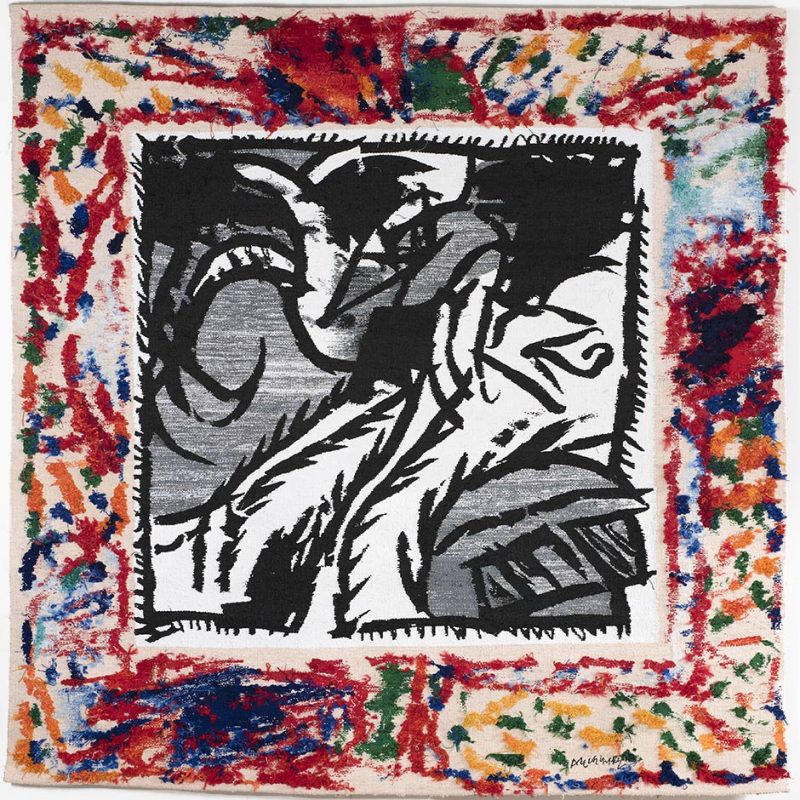
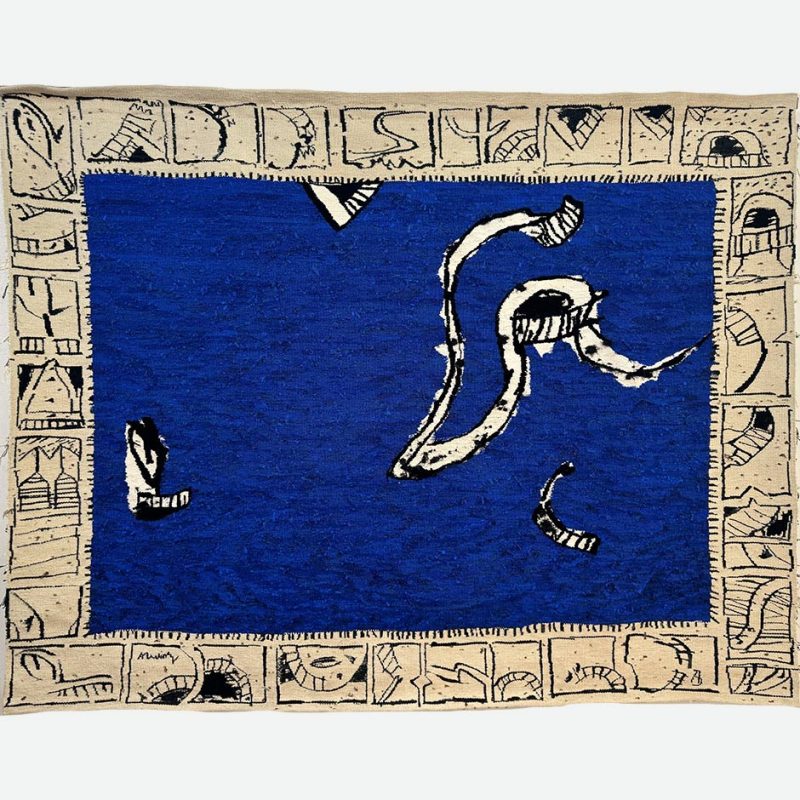
Following the disbandment of CoBrA, Alechinsky embarked on a transformative journey to Japan, where he met with calligraphy masters and studied the ancient art of the brush. This encounter permanently altered his technique, leading him to adopt a more fluid, ink-based approach and cultivating his unique ambidextrous skill. He became a master of the script-like mark, treating the surface of his work as a space for “vibrant inks to dance.” This fascination with Eastern aesthetics also introduced his signature use of marginalia—a concept drawn from Japanese prints where a central image is surrounded by smaller, peripheral “notes” or scenes. This layout creates a narrative dialogue between the center and the edge, a stylistic hallmark that defines his most celebrated designs.
Weaving the Parenthesis: Collaboration with Atelier 3
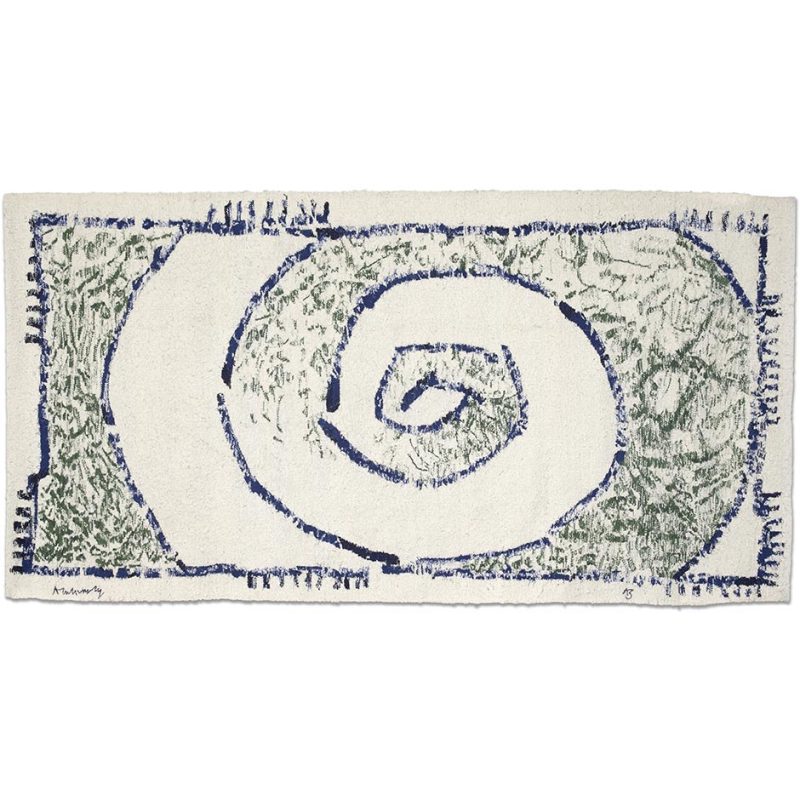
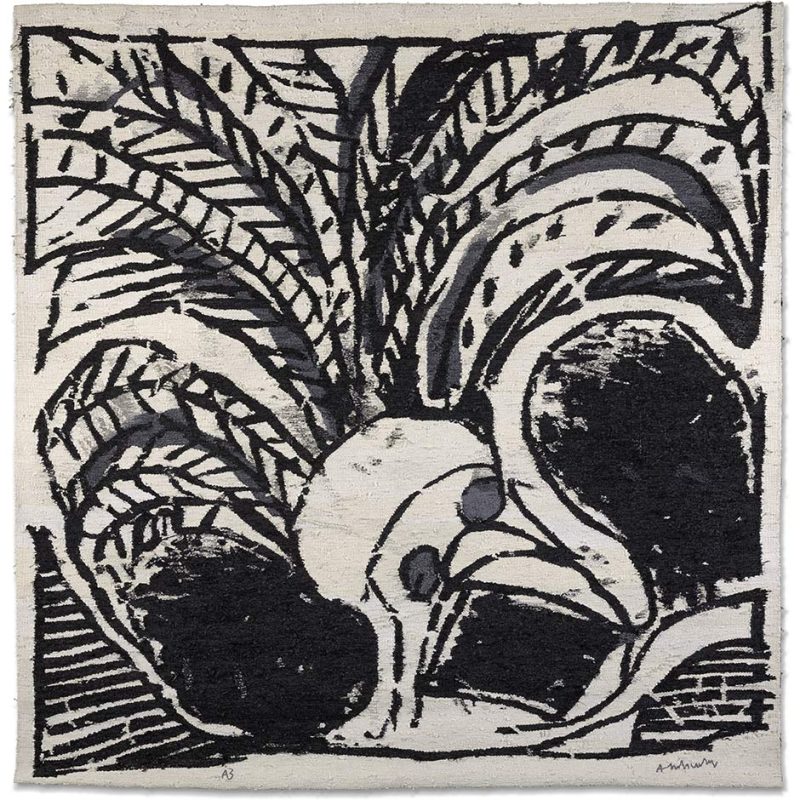
The translation of Alechinsky’s kinetic, ink-driven style into the medium of tapestry required the interpretive mastery of Atelier 3 in Paris. Because Alechinsky’s work relies on the “living” quality of the line, the weavers were tasked with recreating the fluidity of his script through variations in thread thickness and texture. In works like L’invention de la parenthèse, Le paon de binje, and Spire, the workshop successfully transformed his paintings on paper into monumental textile art. This process introduces a sense of weight and dimensionality that transcends the flat canvas, allowing the “whimsical and primitive” forms of his pictorial vocabulary to occupy the architectural space with a new, tactile authority.
A Legacy of Pictorial Exploration
Today, Pierre Alechinsky is recognized as one of Belgium’s most influential living artists, with works residing in the permanent collections of prestigious museums worldwide. His tapestries stand as a testament to his versatility and his belief that a personal visual language should be able to adapt across any medium. At Boccara, these woven works are celebrated for their ability to bring a touch of the fantastical—inspired by masters like Hieronymus Bosch—into the contemporary home. They remain a striking example of how modern calligraphy and the grand tapestry tradition can merge to create a space that invites both contemplation and joy.