
Alexander Calder
Boccara artwork selection by Didier Marien
Works by Alexander Calder in the Boccara Collection




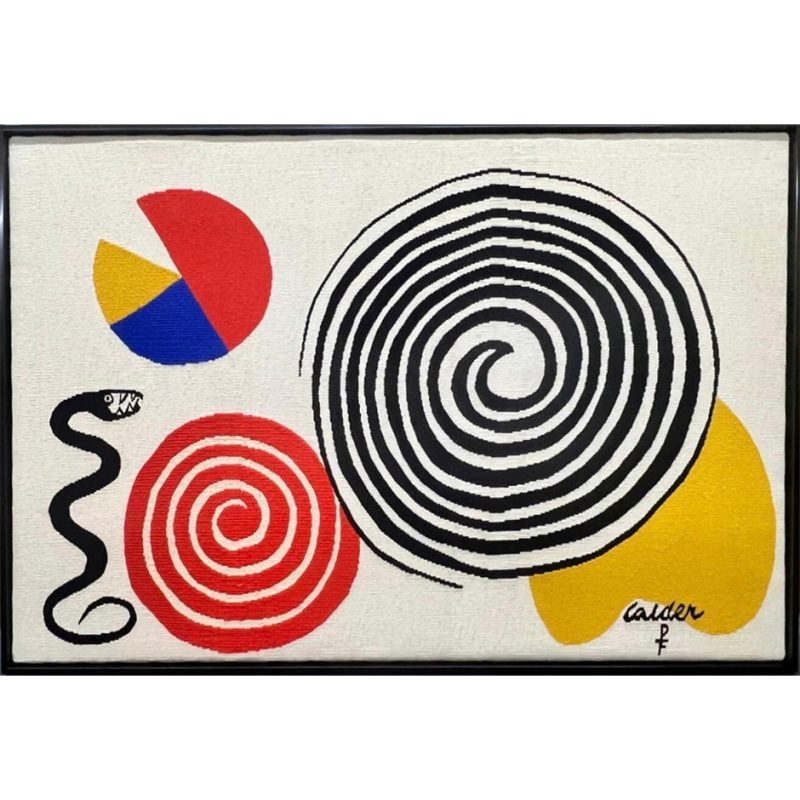
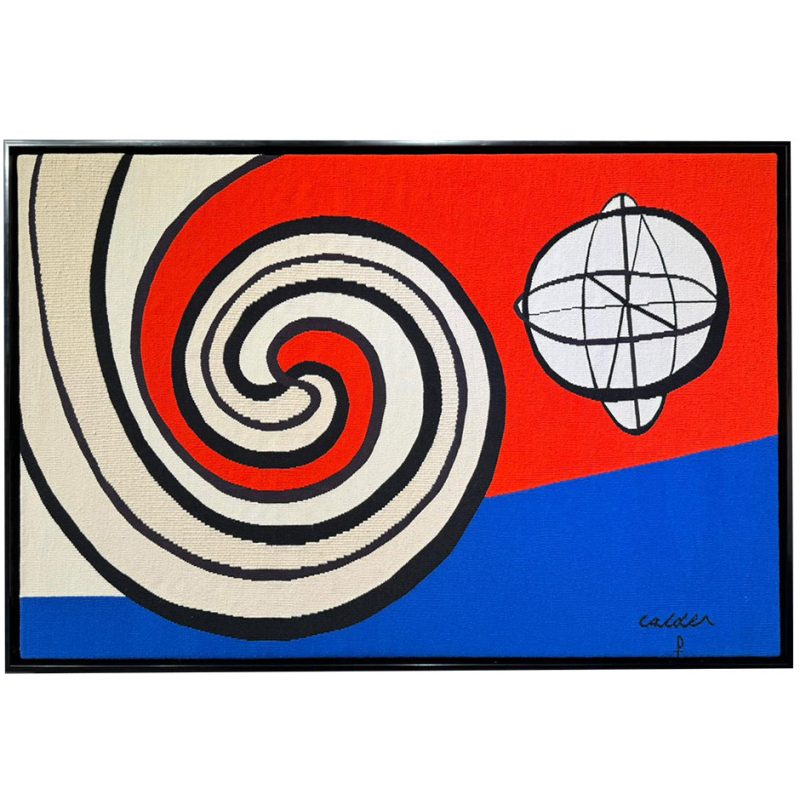
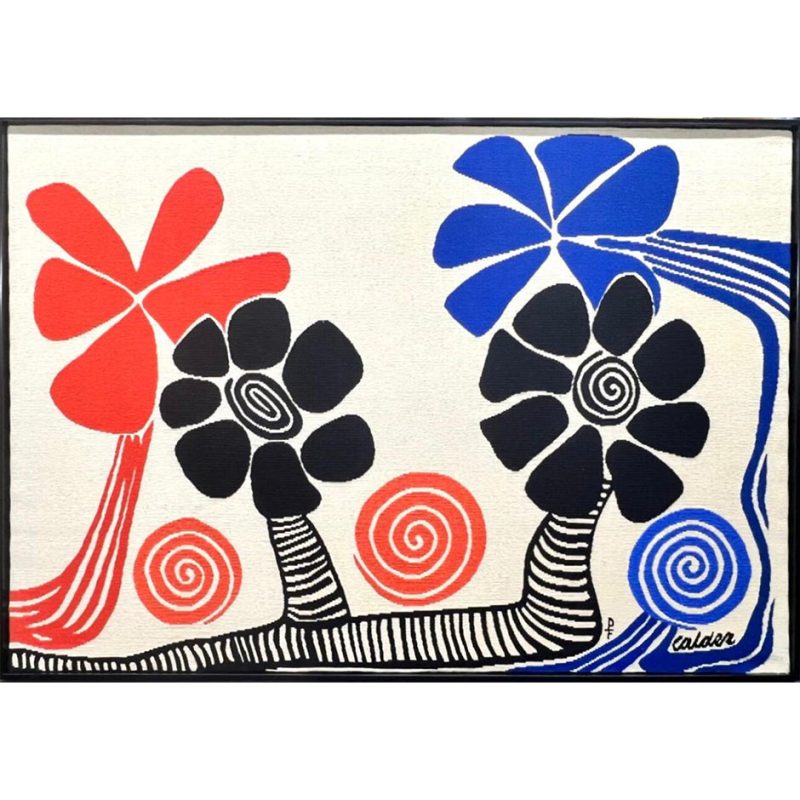

ORIGINS & VISION
About the Artist
Alexander Calder: The Master of Kinetic Abstraction
Alexander Calder (1898–1976) redefined the boundaries of sculpture by introducing movement as a primary medium. Born into a family of artists, Calder initially pursued mechanical engineering—a background that later informed the technical precision and balance of his kinetic works. His trajectory shifted in 1923 when he moved to New York to study at the Art Students League, eventually relocating to Paris, where he established himself within the European avant-garde.
From Engineering to the Avant-Garde
Calder’s early career was defined by his “Circus” (1926) and a transformative 1930 encounter with Piet Mondrian, which pushed him toward total abstraction. By joining the “Abstraction-Création” group in 1931, he began developing the “mobiles”—a term coined by Marcel Duchamp to describe sculptures that relied on air currents and motors for motion. These works broke from the traditional density of sculpture, favoring lightness and a lyrical, three-dimensional “drawing in space”.
The Saché Years: A Textile Rebirth
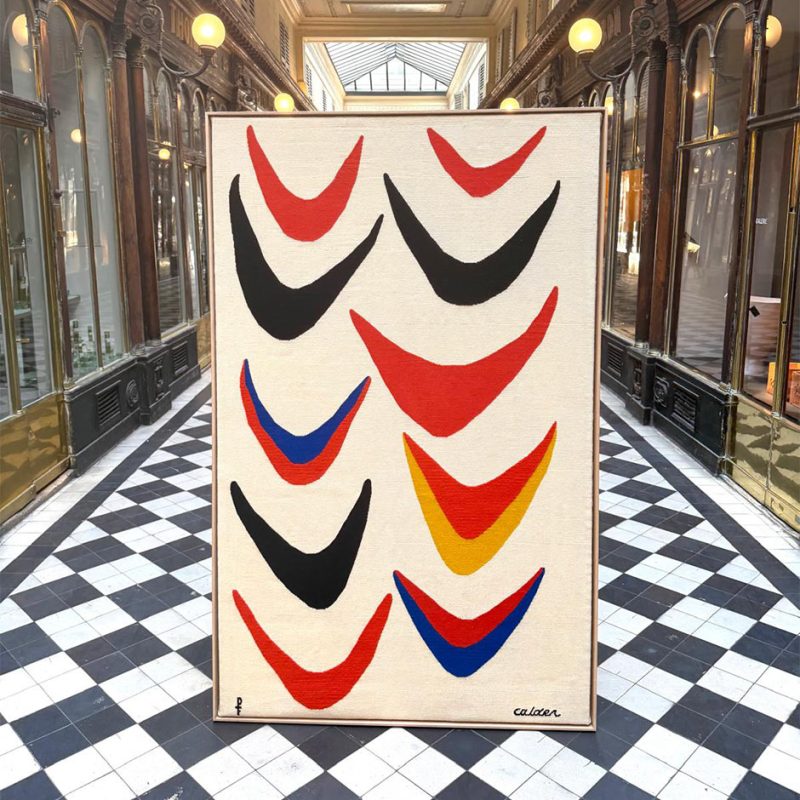
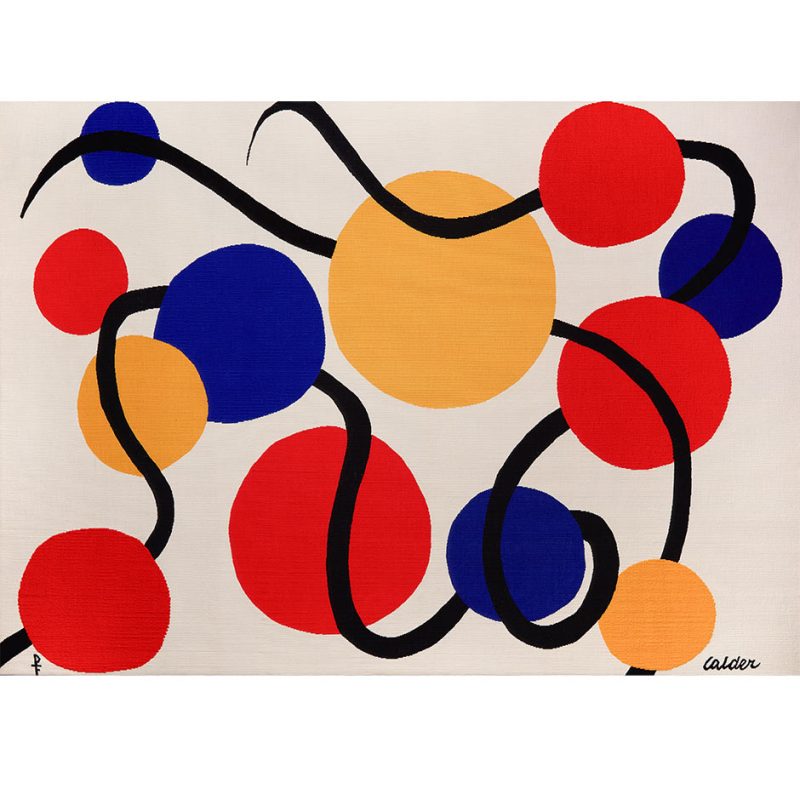
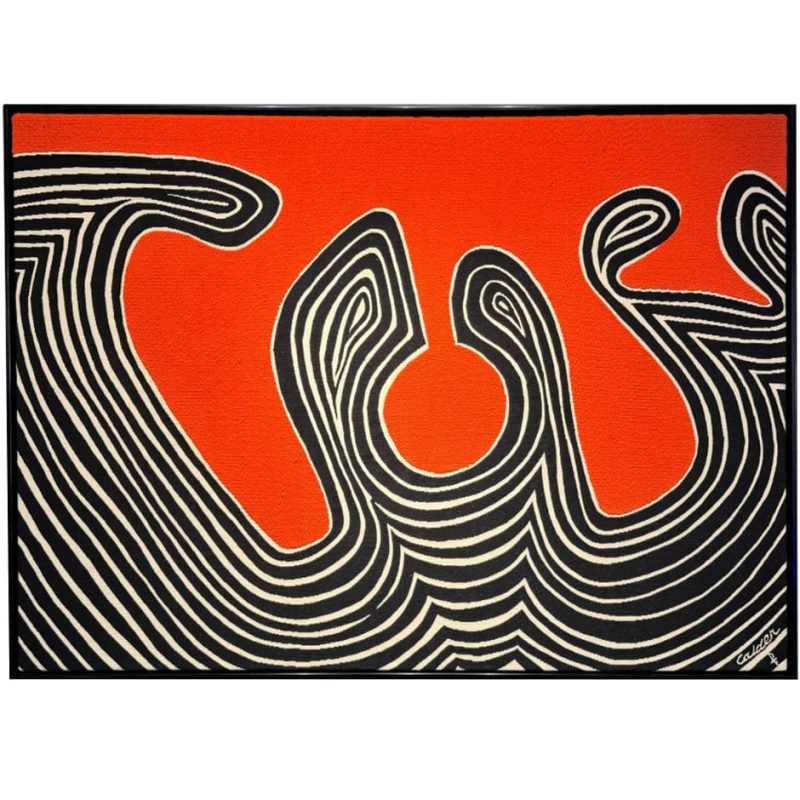
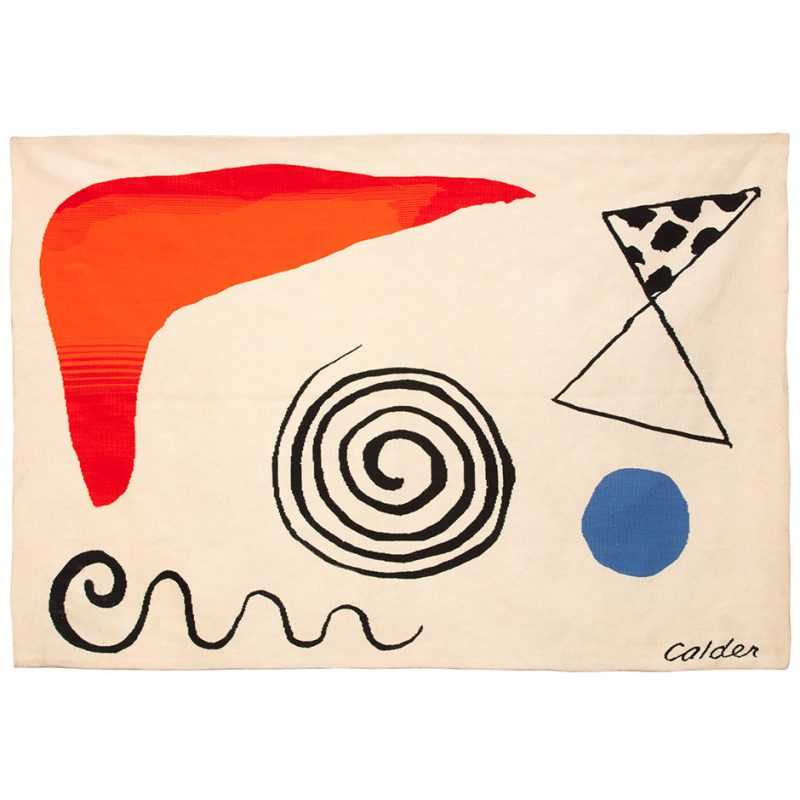
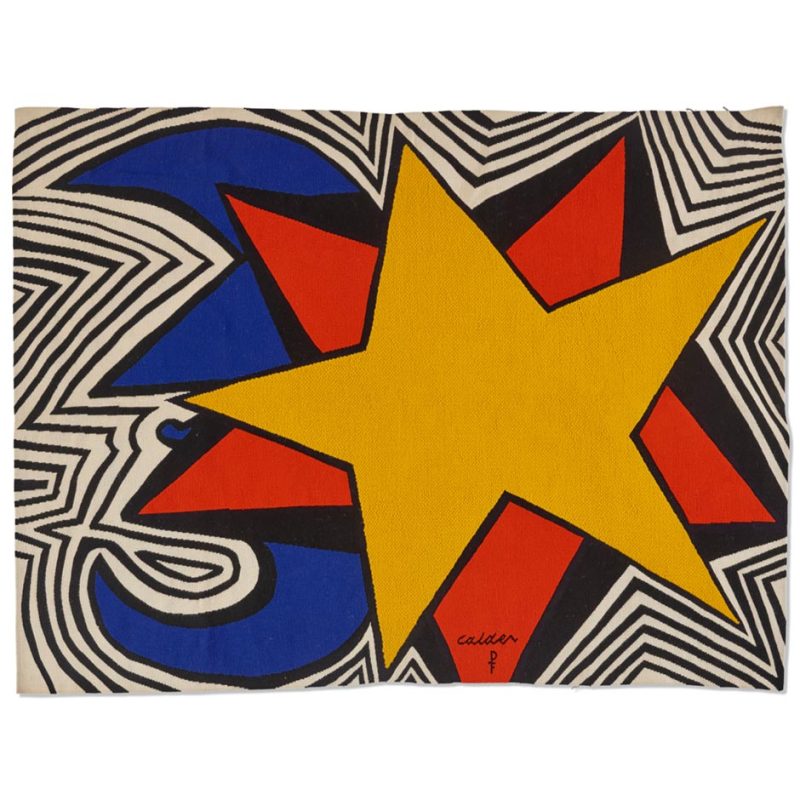
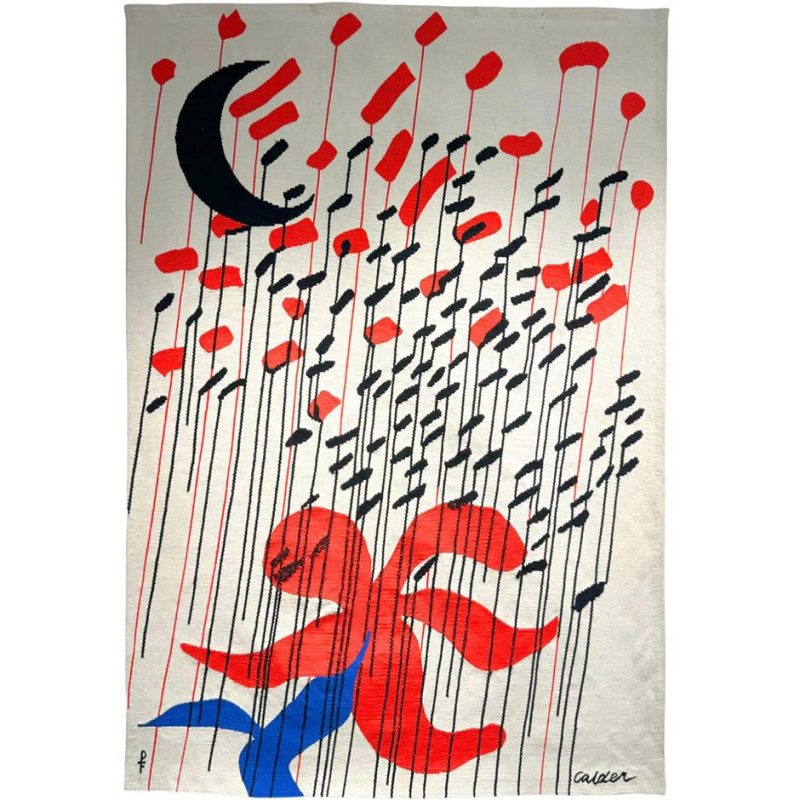
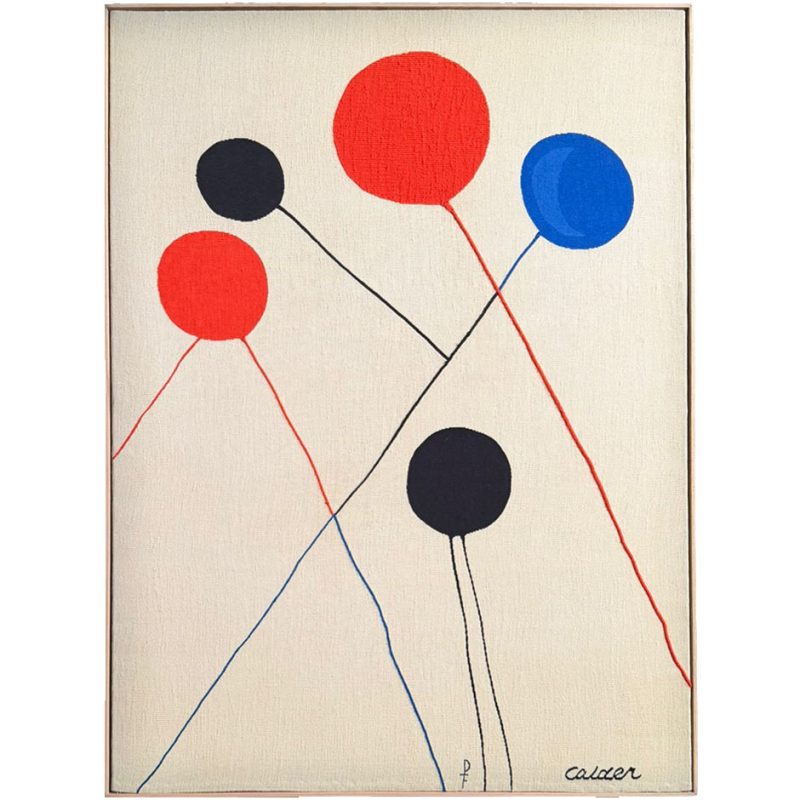
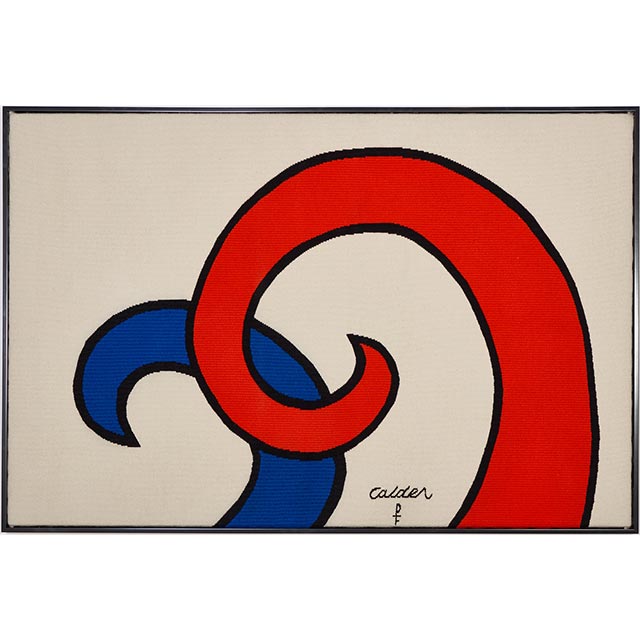
In 1963, Calder settled into a new workshop in Saché, France, where he began a prolific exploration of tapestry. While he had a long-standing personal interest in textiles—making his own neckties and designing rugs for his wife to hook by hand—his professional foray into the medium coincided with a broader revival of the Aubusson workshops. Collaborating with legendary ateliers like Pinton Frères and pioneers like Marie Cuttoli, Calder translated his primary-colored gouaches into monumental woven editions.These tapestries were not mere reproductions; they were complex architectural works. Utilizing Australian wool dyed to Calder’s exact specifications, each square yard of a tapestry could take up to a month to produce. The medium allowed Calder to ground his kinetic energy into a tactile, static form, using rhythmic curves and bold contours to evoke movement.
Rare Editions and the Bicentennial Series
Among his most coveted textile works are those from the “Bicentennial Tapestries” series, commissioned in 1975 to commemorate the 200th anniversary of the American Revolution. While originally intended for an edition of 200, historical records suggest that only 37 to 50 sets were ever fully realized, making pieces like La Poire, Le Fromage, et Le Serpent exceptionally rare. These works, alongside iconic designs such as Butterfly and Anguilles Rayées, highlight his ability to merge modernist innovation with centuries-old French craftsmanship.
A Lasting Global Legacy
Calder’s influence was cemented through high honors, including the Grand Prize for Sculpture at the 1952 Venice Biennale and the American Presidential Medal of Freedom. His tapestries quickly gained critical acclaim, featured in major retrospectives at the Guggenheim (1964) and the Whitney Museum (1971). Today, these woven editions are celebrated by major institutions as vital extensions of his sculptural legacy, capturing the playfulness and clarity of his vision in a rich, architectural medium.