
Fernand Léger
Boccara artwork selection by Didier Marien
Works by Fernand Léger in the Boccara Collection

ORIGINS & VISION
About the Artist
From Architectural Draftsman to Cubist Pioneer
Fernand Léger (1881–1955) was a visionary architect of the modern image. Born in Normandy and trained initially as an architectural draftsman in Caen, his arrival in Paris at the turn of the century placed him at the epicenter of a radical aesthetic shift. While he was deeply influenced by the structural clarity of Paul Cézanne, Léger moved beyond the analytic fragmentation of his peers. By 1910, he had developed a singular style characterized by cylindrical forms and mechanical rhythms—a technique critics famously dubbed “Tubism.” As a key member of the Section d’Or and a contemporary of the Duchamp brothers, Léger sought to capture the “dazzle” of the modern world, viewing the polished surfaces of industrial machinery as the true poetry of the 20th century.
The Machine Aesthetic and Social Optimism
Léger’s service as a sapper during World War I profoundly impacted his artistic philosophy. Exposed to the raw, metallic beauty of artillery and the camaraderie of soldiers from all walks of life, he emerged with a commitment to a “democratic” art. He believed that the visual clarity of the machine could serve as a universal language. Throughout the 1920s and 30s, his work expanded into set design, film—most notably the avant-garde Ballet Mécanique—and large-scale murals. His figures became standardized, almost robotic “Everymen,” reflecting his belief that the human form should be treated with the same structural objectivity as a spark plug or a steel beam.
The Textile Revolution: Cuttoli and Atelier Pinton
Léger was a pioneer in the mid-century revival of tapestry, recognizing early on that the medium could function as a “mural of wool” for modern architecture. In the late 1920s, he began a landmark collaboration with the visionary entrepreneur Marie Cuttoli, who challenged the stagnant traditions of Aubusson by commissioning modern masters to create cartoons for the loom.
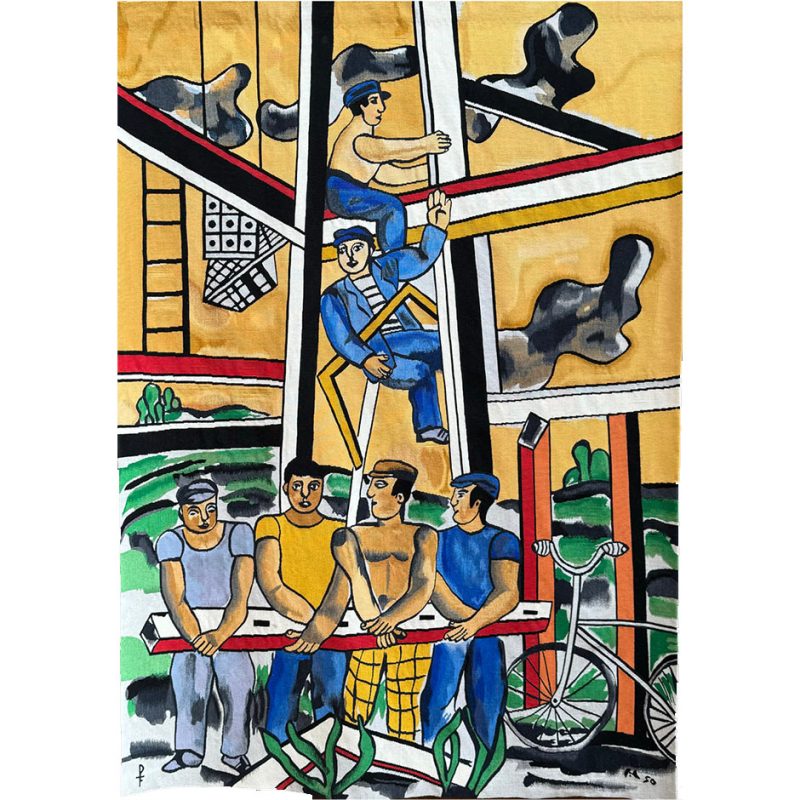
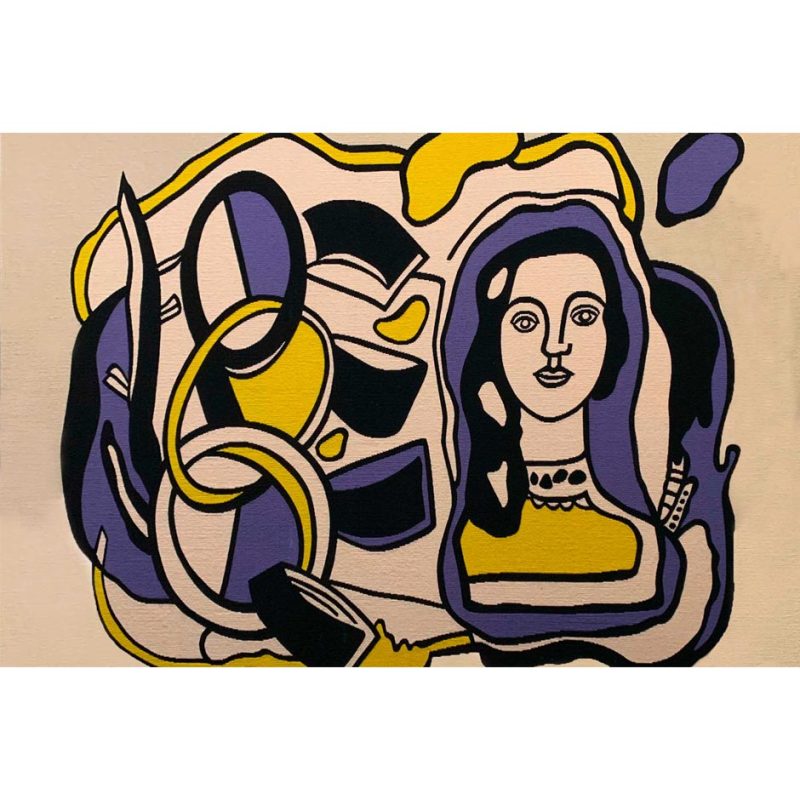
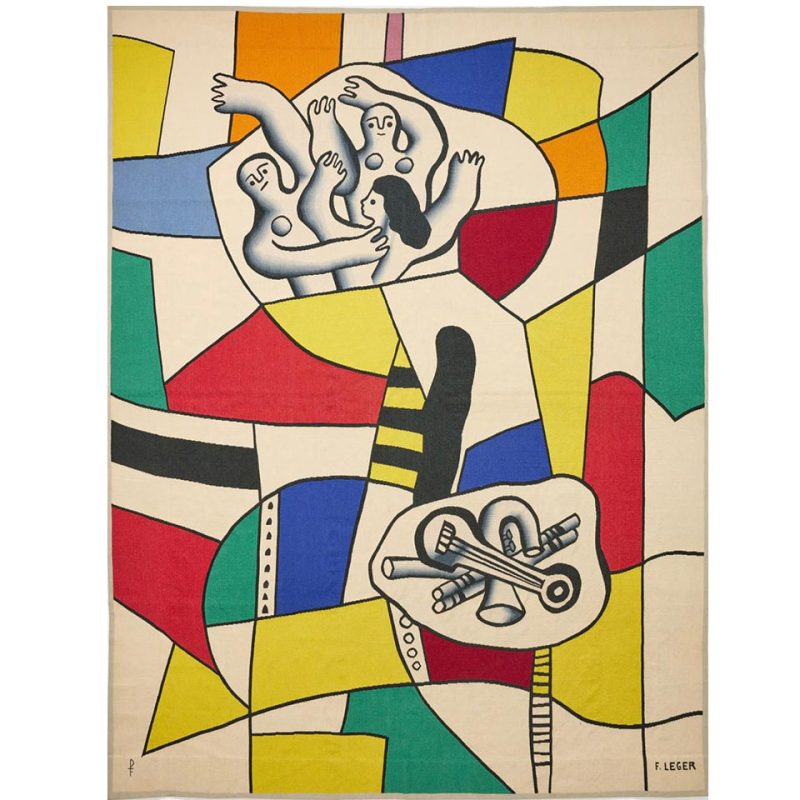
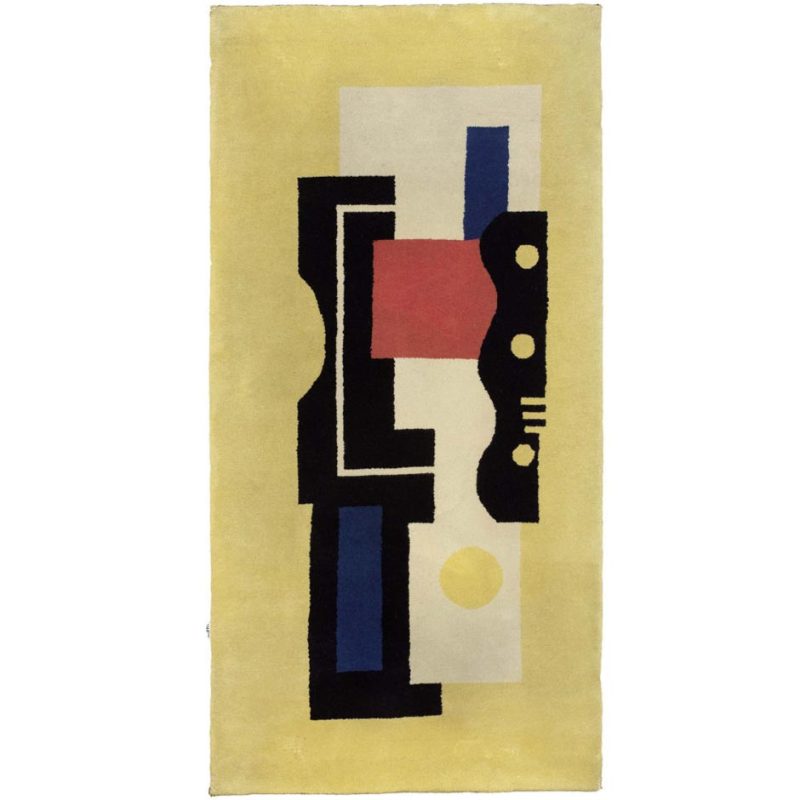
This journey into textiles reached a peak in the early 1950s with his partnership with Atelier Pinton. Unlike earlier attempts to replicate painterly effects, Léger and Pinton emphasized the inherent strengths of the weave: bold contrast, tactile scale, and unmodulated color. A definitive example of this era is the São Paulo tapestry, a work adapted specifically for the textile medium. In these compositions, Léger’s signature thick black outlines serve a dual purpose—they provide a visual “skeleton” for his primary colors while ensuring the work maintains its structural integrity when viewed from an architectural distance.
A Legacy of Humanist Modernism
In his final years, Léger’s work evolved toward a more luminous and optimistic humanism. His Constructeurs series and postwar landscapes celebrated the spirit of collective labor and leisure, utilizing flatter planes of pure color that seemed to float independently of their black contours. This “liberated color” became a hallmark of his late style, influencing generations of graphic and pop artists. Today, Léger’s work is a cornerstone of global institutions, from MoMA in New York to the Centre Pompidou in Paris. His tapestries remain among the most celebrated examples of the 20th-century decorative arts, standing as monumental evidence of an artist who succeeded in making the avant-garde truly accessible to the common man.