
Adolph Gottlieb
Boccara tapestry selection by Didier Marien
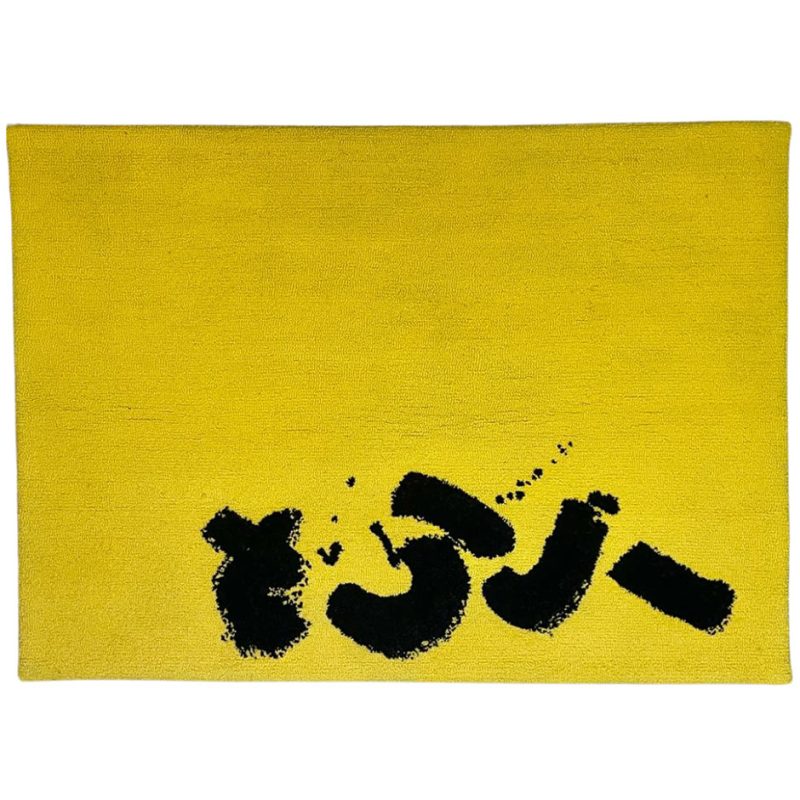
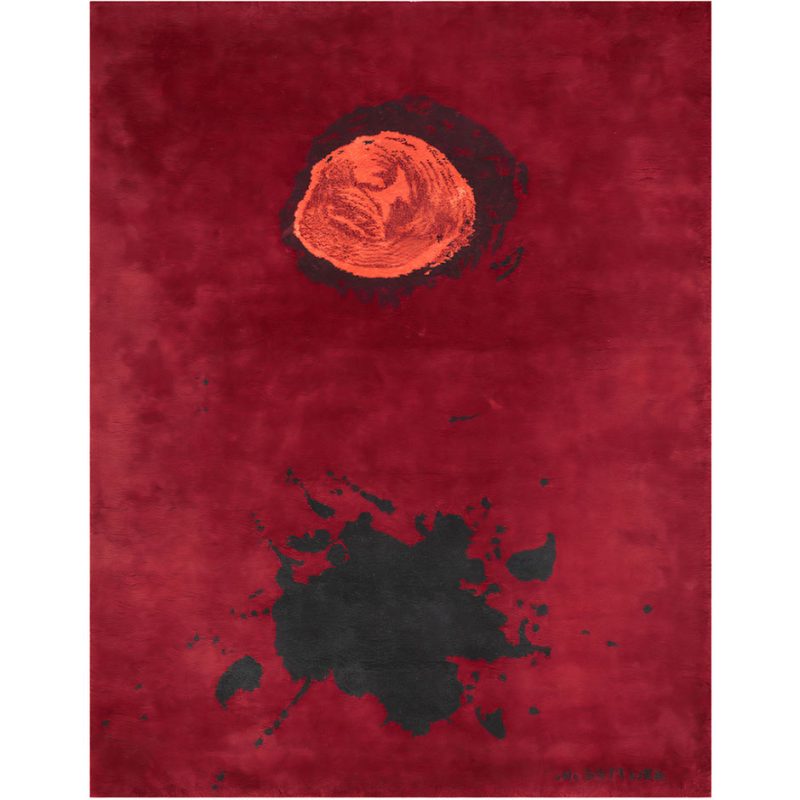
Tapestries by Adolph Gottlieb in the Boccara Collection

ORIGINS & VISION
About the Artist
The Evolution of a Visionary: Adolph Gottlieb
Adolph Gottlieb (1903–1974) stands as a foundational pillar of the New York School. A restless innovator, his career was defined by a transition from classical training at the Art Students League and Paris’s Académie de la Grande Chaumière to the vanguard of American abstraction. Influenced early on by the structural rigor of European modernists like Picasso and the subconscious explorations of the Surrealists, Gottlieb sought a visual language that could articulate the gravity of the post-war era.
The Birth of the Pictograph and Abstract Expressionism
In the early 1940s, Gottlieb—alongside his contemporary Mark Rothko—famously declared that “there is no such thing as good painting about nothing.” This philosophy birthed his “Pictograph” series, where he utilized a grid-like structure to house various mythic and biomorphic symbols. This period was crucial in moving American art away from provincial realism toward a universal, symbolic abstraction that addressed the collective human psyche.
The Burst and Imaginary Landscape Series
By the 1950s, Gottlieb’s work evolved into the iconic “Bursts” and “Imaginary Landscapes.” These compositions stripped the canvas down to its essential dualities: calm and chaos, earth and sky, the organic and the geometric. His signature “sun” forms hovering over tangled, gestural masses became some of the most recognizable motifs of Abstract Expressionism. This era also marked his “Picto-Textural” phase, where he began experimenting with the physical surface of the work, emphasizing a tactility that made his later transition into tapestry and sculpture a natural progression of his practice.
A Multidisciplinary Legacy
Gottlieb’s influence extended far beyond the easel. A leading member of “The Irascibles”—a group of artists who protested the Metropolitan Museum of Art’s conservative leanings—he was a fierce advocate for the validity of modern art. His accolades, including the 1963 Gran Premio at the São Paulo Bienal, solidified his international standing. Today, his work in textiles and woven editions represents a vital chapter of his career, showcasing how his monumental symbols maintain their emotional resonance and structural integrity when translated into the world of architectural fiber art.