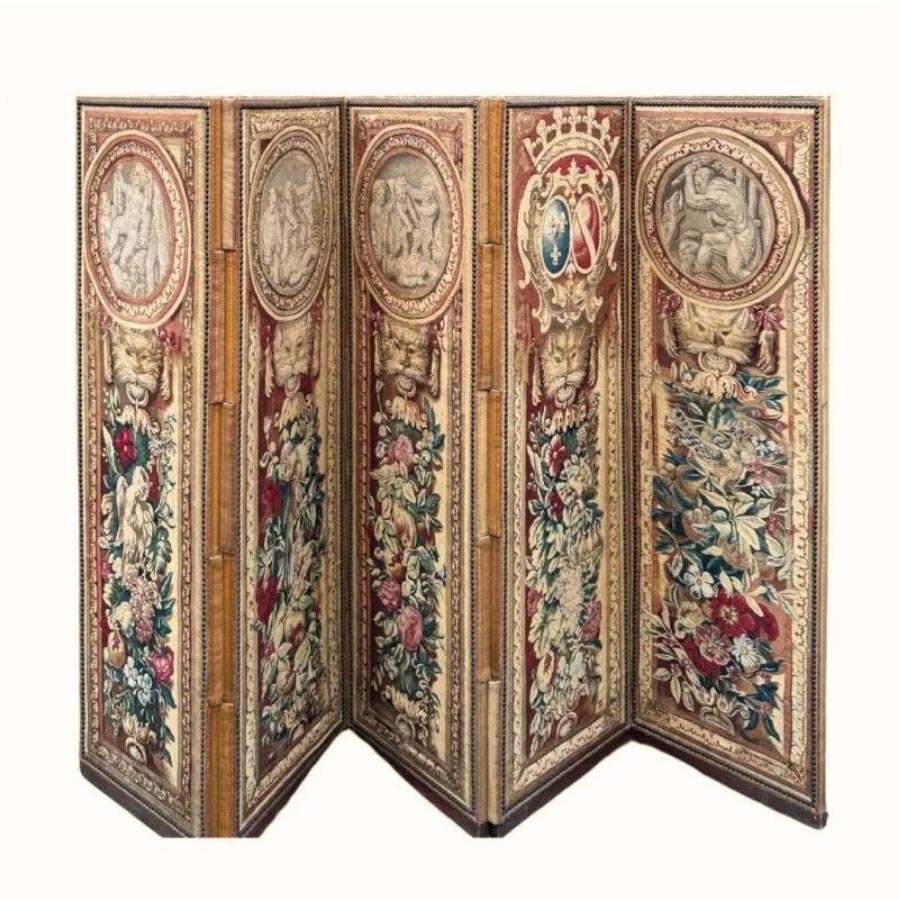
Antique 18th Century Brussels Paravant Tapestry
Dimensions: 134 x 185 in, 340 x 470 cm cm
Date: 18th Century
Material: Wood and Handwoven Wool
Condition: Good Condition
Provenance: Private French Collection
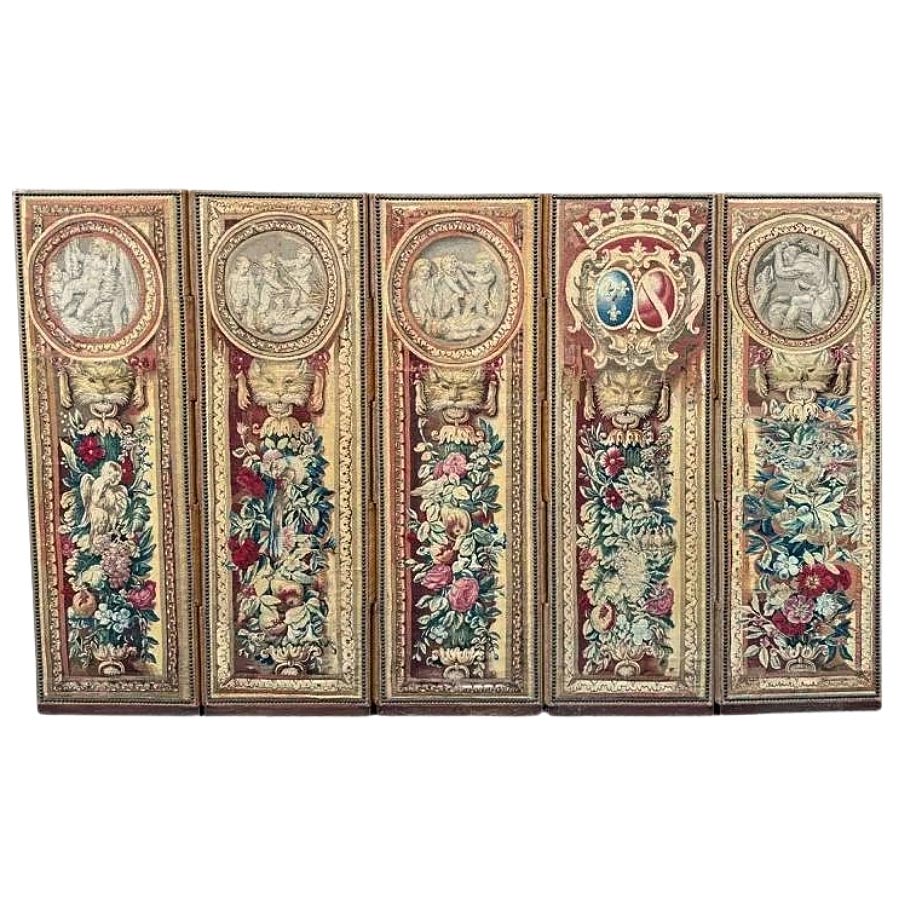
This exceptional Brussels Paravant Tapestry is an early 18th-century five-panel screen of remarkable scale and historical significance. Measuring 340 x 470 cm when fully extended, the paravant consists of five mounted tapestry panels set within wooden frames, forming a monumental and decorative room divider typical of aristocratic European interiors.
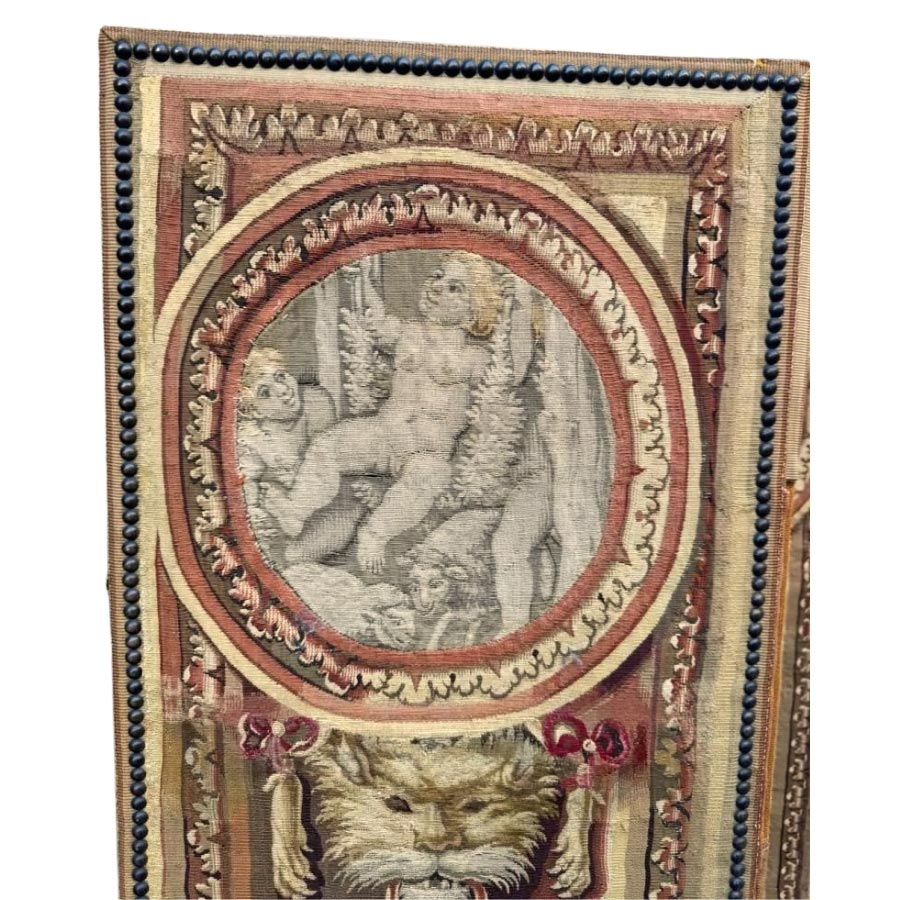
Each panel is adorned with grisaille medallions featuring putti, woven in subtle tonal gradations to imitate sculpted stone relief. Beneath these circular compositions rest lion masks and interlaced garlands of fruit and flowers, symbols traditionally associated with strength, abundance, and prosperity. The combination of classical ornament and naturalistic detail reflects the refined decorative language of Brussels workshops during the late 17th and early 18th centuries.
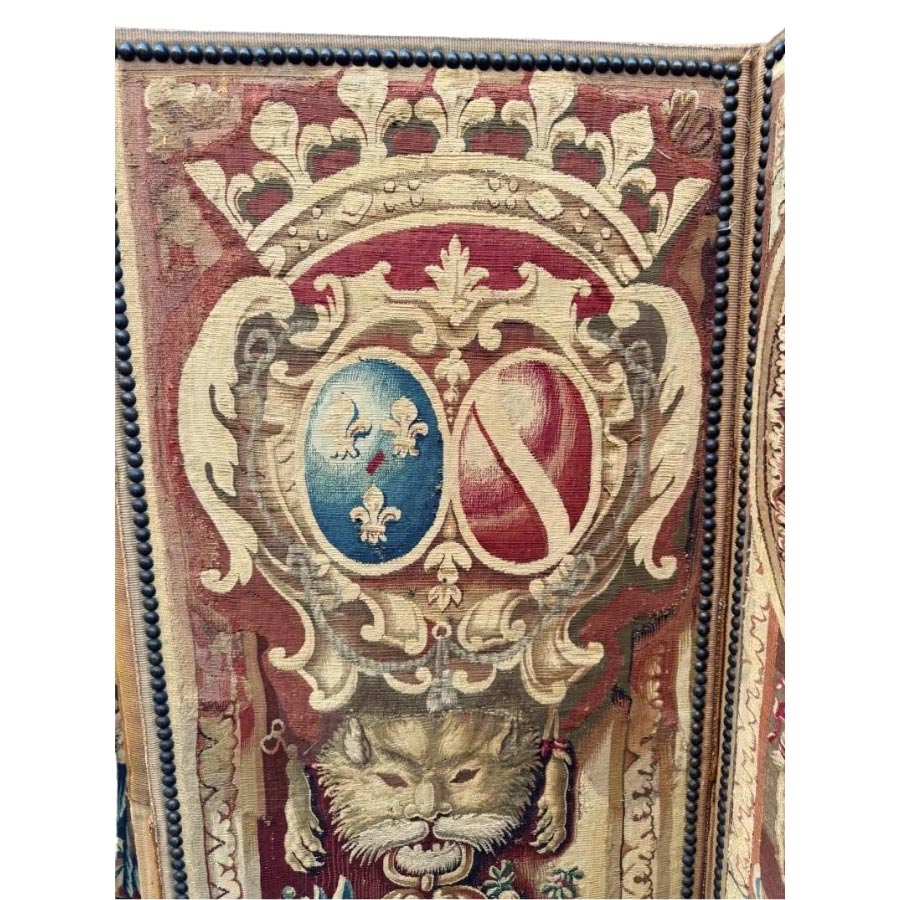
One panel prominently displays the dual coats of arms of Louis Alexandre de Bourbon, Count of Toulouse, the legitimized son of King Louis XIV, and his wife Marie-Victoire de Noailles, Countess of Toulouse. The presence of their heraldry strongly suggests this Brussels Paravant Tapestry was commissioned for one of their residences, possibly the Hôtel de Toulouse in Paris or the Château de Rambouillet. Such aristocratic provenance elevates the historical importance of the work beyond its decorative appeal.
Woven in wool, the tapestry panels demonstrate fine craftsmanship, particularly in the grisaille medallions and botanical interlacings. Brussels ateliers of this period were renowned for their precision and balance between architectural illusion and ornamental richness.
Originally conceived as “mobile art,” tapestries provided insulation as well as grandeur in large interiors. Mounting them into a paravant allowed for flexibility in spatial arrangement, making them both functional and ceremonial.
Refinished yet well preserved, this five-leaf Brussels Paravant Tapestry stands as an impressive example of early 18th-century Flemish weaving, combining noble heraldry, classical symbolism, and architectural sophistication.