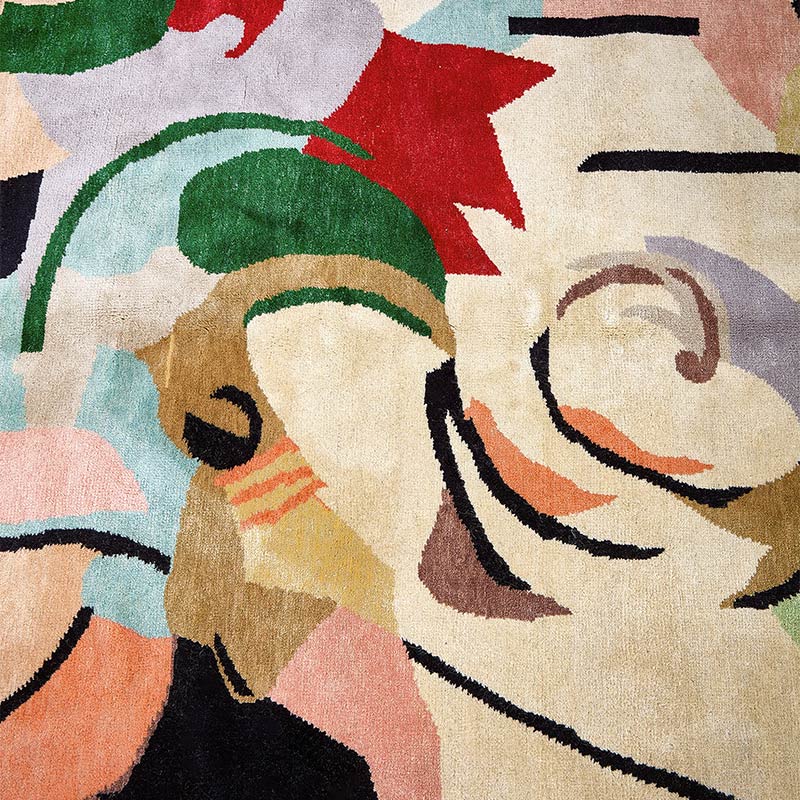


Gravures pour les Pensées de Pascal
Artist: Albert Gleizes
Date: 1949 (after the engraving)
Dimensions: 686 × 1054 cm (270 × 415 in.)
Material: Wool and natural silk (customizable in wool, silk, or both)
Edition: Limited edition of 8
Signature: Signed and numbered lower right
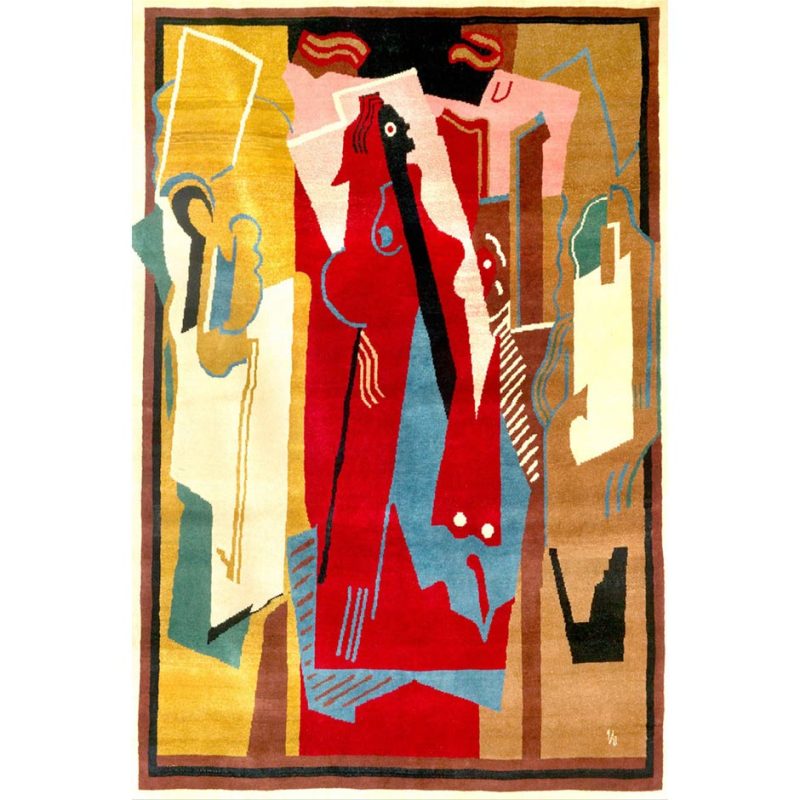
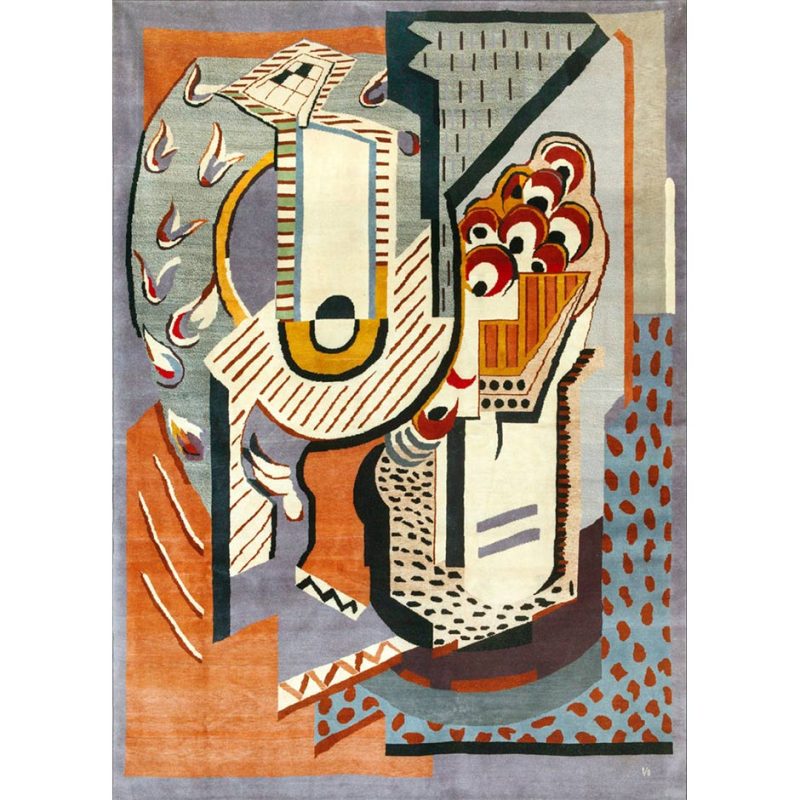
The Gravures pour les Pensées de Pascal rug is derived from a 1949 engraving by Albert Gleizes, one of the founding figures of Cubism and a key theorist of abstraction in the early twentieth century. Throughout his career, Gleizes sought to move beyond representation toward a structured, spiritual form of art grounded in rhythm, geometry, and movement. This composition, created in response to the philosophical writings of Blaise Pascal, reflects that ambition—translating complex thought into a visual language of balance and order.
The design is characterized by interlocking geometric forms that unfold across the surface in a measured yet dynamic arrangement. Rather than depicting a literal subject, Gleizes constructs a system of lines and planes that guide the viewer’s eye through the composition. The result is a visual rhythm that echoes the intellectual and meditative nature of Pascal’s texts, where structure and intuition coexist.
Rendered as a handwoven rug, the composition takes on a new physical presence. The combination of wool and natural silk introduces subtle variations in texture and light, allowing different elements of the design to emerge depending on the viewing angle. The interplay between matte and luminous fibers enhances the depth of the geometric forms, reinforcing the sense of movement that defines Gleizes’s work.
Produced in a limited edition of eight by Atelier Boccara, this piece reflects a carefully authorized translation of Gleizes’s engraving into textile form. Documented in the Albert Gleizes Catalogue Raisonné (Somogy éditions d’Art, 1998, vol. II, p. 775), the design carries both scholarly significance and a strong connection to the artist’s theoretical practice.
Customizable in material, dimensions, and color, the rug allows for adaptation to a variety of interiors while preserving the integrity and structure of the original composition.