
Ville Imperiale de Katsura en Automne
Artist: Bernard Cathelin
Date: c. 1980 (design)
Dimensions: 220 × 220 cm (86 × 86 in.)
Material: Handwoven wool tapestry
Manufacture: Atelier 3, Paris
Edition: 6
Signature: On bolduc
Condition: Excellent
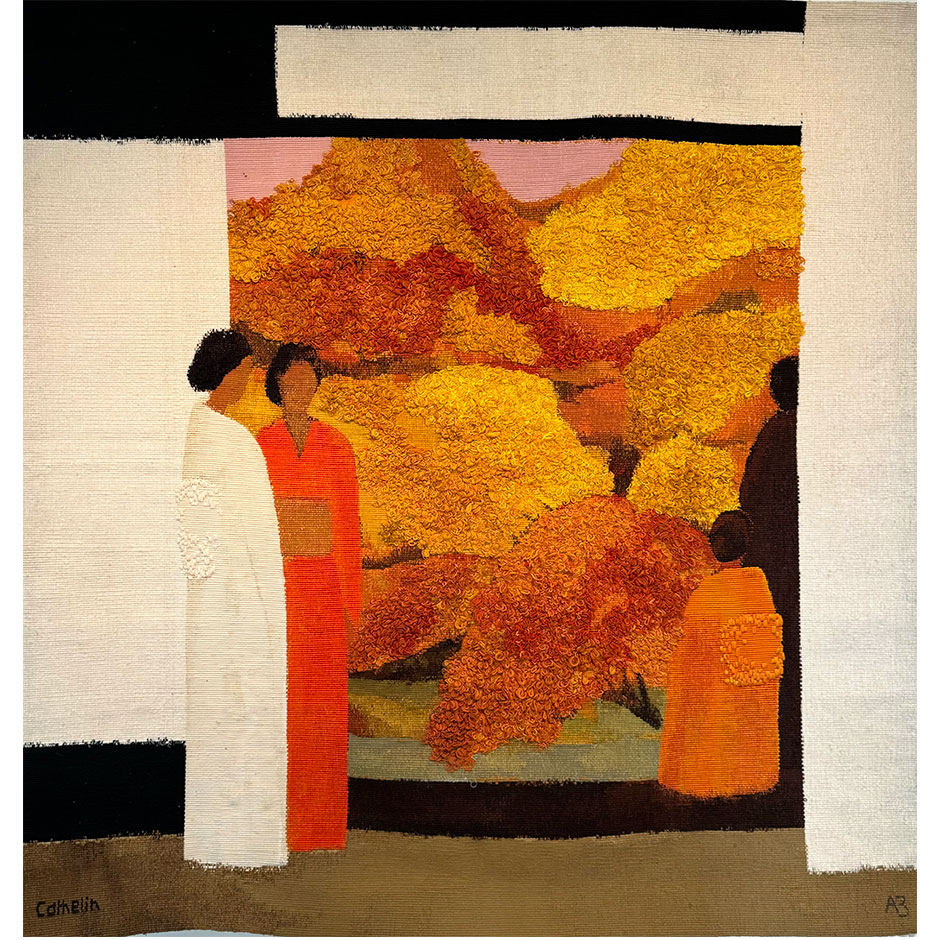
Ville Impériale de Katsura en Automne is a monumental tapestry by Bernard Cathelin, created in collaboration with Atelier 3, that translates the artist’s distinctive painterly language into a richly textured and immersive textile form. Rooted in Cathelin’s fascination with architectural space and seasonal atmosphere, the composition evokes the serene elegance of the Katsura Imperial Villa in Japan, reimagined through his bold use of color and simplified form.
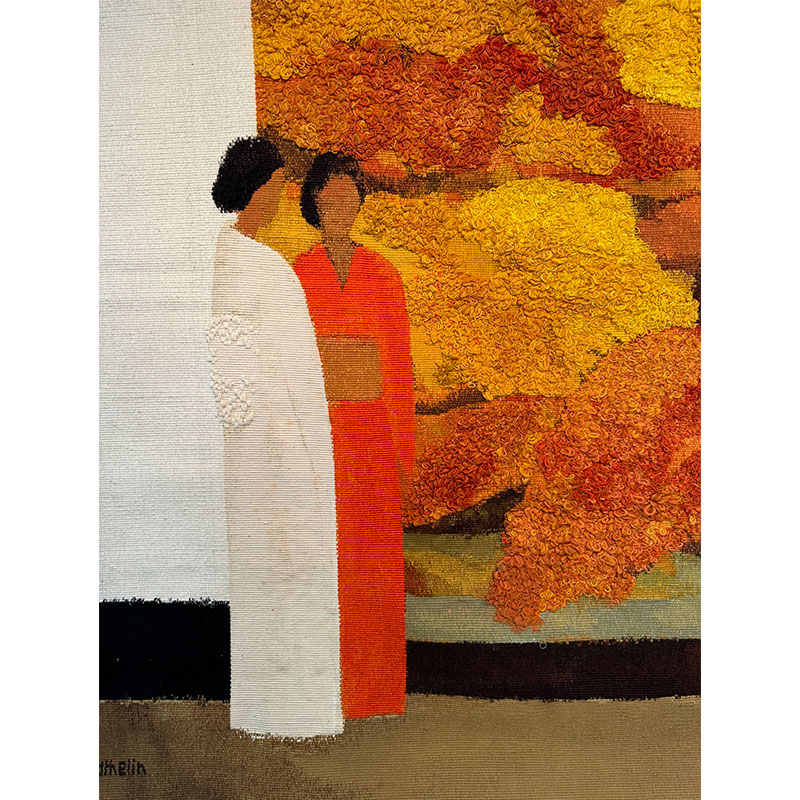
The scene is structured around a quiet architectural threshold. Two figures stand on the left before an open doorway, their presence anchoring the composition and guiding the viewer’s gaze inward. Through this opening, the landscape unfolds—autumnal trees rendered in warm, saturated tones suggest a moment suspended between interior and exterior. On the right, two additional figures appear to be exiting, reinforcing a subtle narrative of movement and transition. This interplay of figures creates a sense of passage, as though the viewer is witnessing a fleeting moment of arrival and departure.
Cathelin’s composition balances geometry with softness. Planes of color define the architecture, while the surrounding foliage introduces a lyrical contrast. His palette—often built on deep reds, ochres, and softened greens—captures the essence of autumn without relying on strict naturalism, instead favoring emotional resonance and harmony.
Atelier 3’s role in this work is particularly significant. Known for their innovative “front-of-the-loom” technique, the workshop introduces a sculptural dimension to the tapestry. Certain threads are deliberately brought forward from the surface, creating areas of relief that enhance key elements such as leaves, garments, and hair. This technique gives the composition a subtle three-dimensionality, allowing light to interact with the surface in varied ways and reinforcing the tactile presence of the work.
The nearly square format, spanning over two meters in both directions, lends the tapestry an architectural presence. It functions not simply as a decorative object, but as a spatial element—framing and transforming the environment in which it is placed.
Produced in a limited edition and bearing the artist’s signature on the bolduc, Ville Impériale de Katsura en Automne stands as a refined example of Cathelin’s ability to merge painting, narrative, and textile into a unified and contemplative work.