
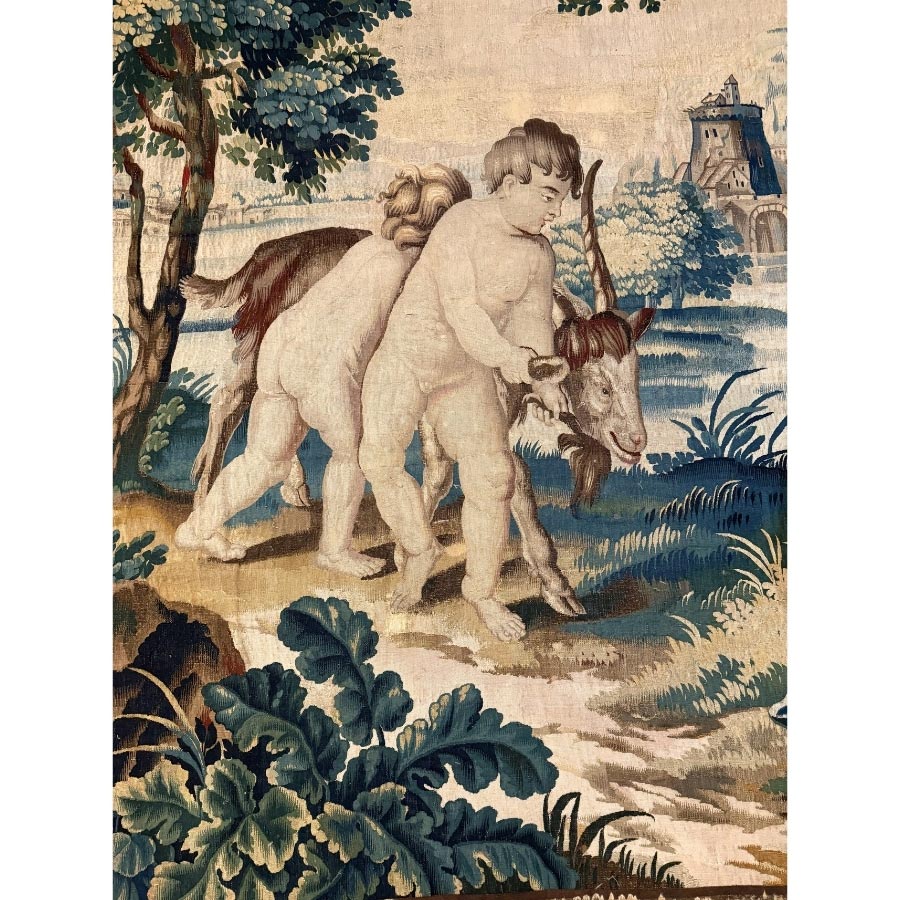
Late 17th–Early 18th Century English Tapestry, Bacchanale d’Enfants avec une chèvre
Dimensions: 89 x 122 in, 227 x 311 cm
Date: Late 17th-Early 18th Century
Material: Handwoven Wool and Silk Tapestry
Condition: Perfect
Provenance: Private French Collection
Manufacture: Mortlake Workshop
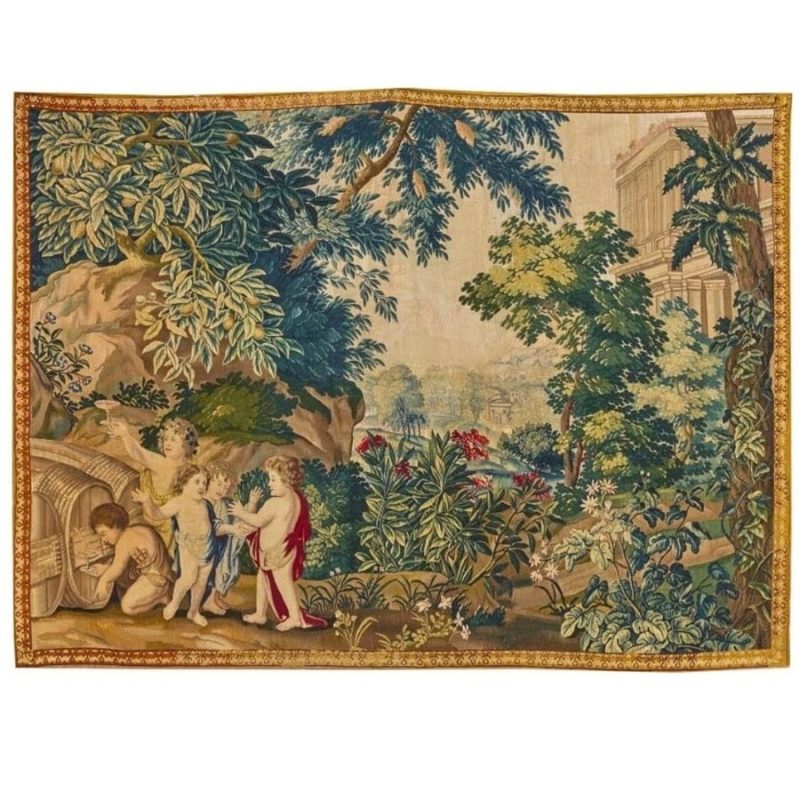
This Mortlake English Tapestry Bacchanale d’Enfants avec une chèvre was woven at the renowned Mortlake workshop in the late 17th to early 18th century. Drawing strongly on Flemish and French artistic models that shaped European tapestry design, the composition reflects the cosmopolitan taste cultivated at the English court during this period.
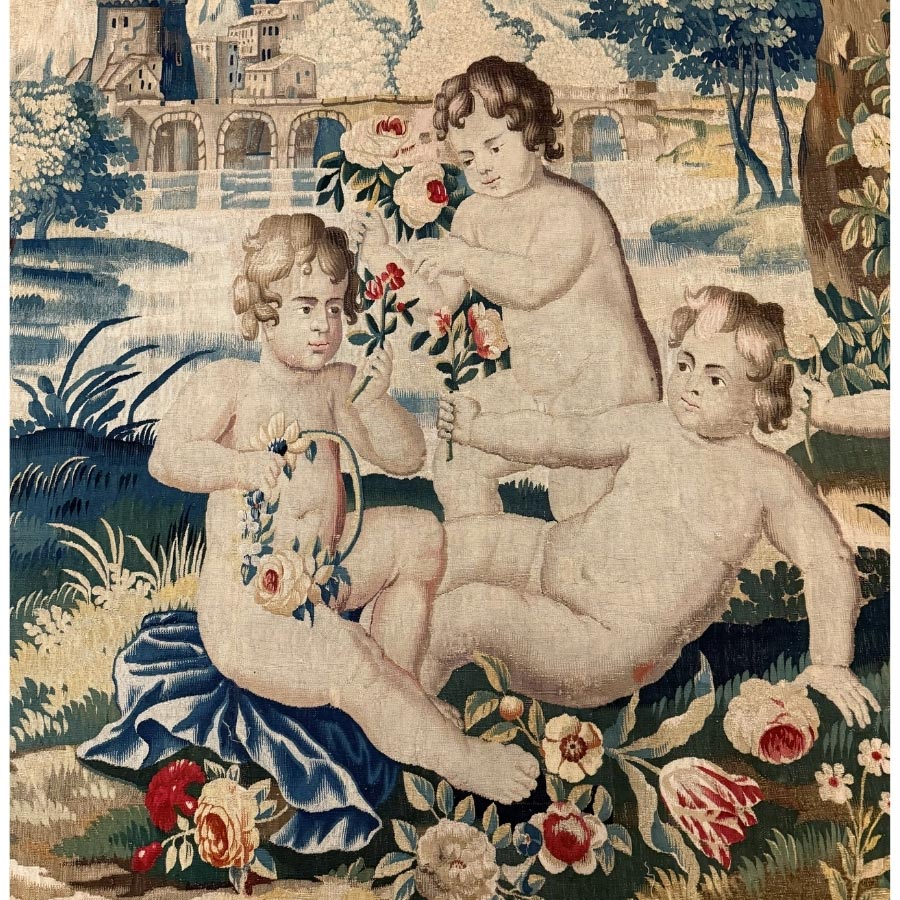
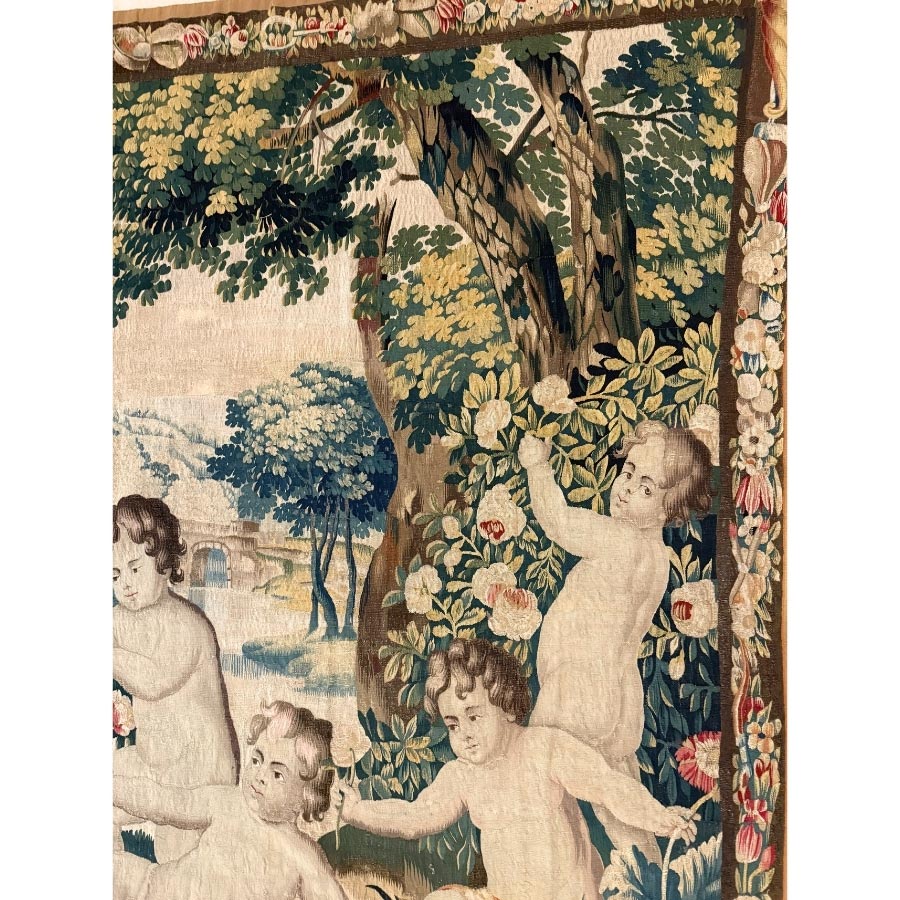
The scene depicts five playful putti engaged in a lighthearted bacchanal, weaving flower crowns and preparing to adorn a gentle goat. Unlike more dramatic mythological bacchanals, this Mortlake English Tapestry Bacchanale transforms the subject into a celebration of innocence, renewal, and youthful vitality. The goat, a familiar motif in children’s bacchanal imagery, appears here not as a symbol of excess but as a participant in pastoral harmony.
Rendered in wool and silk, the figures are enriched by subtle modeling and refined coloration. Soft flesh tones contrast with deep blues and warm reds, demonstrating the workshop’s mastery of tone and texture. The landscape extends into the distance with a fortified estate, calm water, and a classical bridge, grounding the mythological theme within an idealized noble setting.
The finely woven border integrates floral garlands and decorative motifs that frame the narrative with balance and elegance. Mortlake weavers were particularly admired for their ability to combine Flemish compositional structure with English refinement, producing works that were both decorative and intellectually informed.
Well preserved with vivid color and minimal silk wear, this tapestry stands as a sophisticated example of late Baroque English weaving at its height.