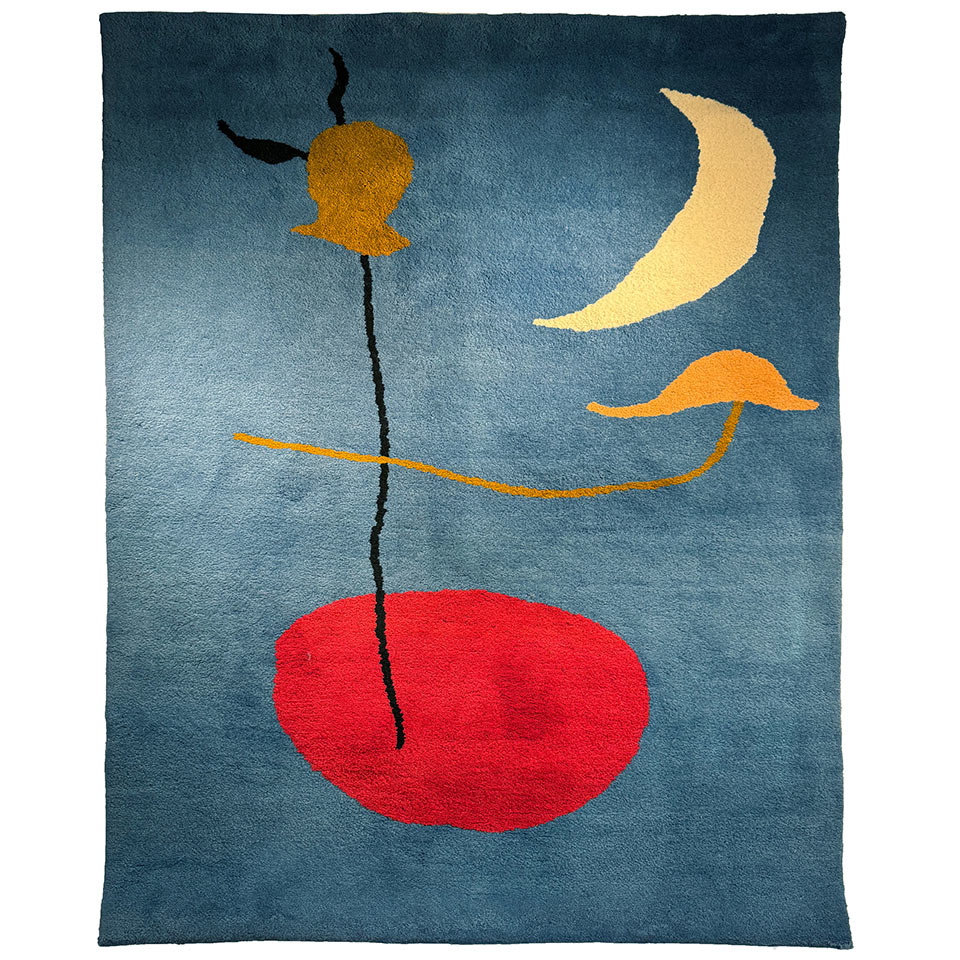
Designed in 1960, Danseuse Espagnole captures the playful spontaneity that defines Joan Miró’s surrealist imagery. Rather than depicting a dancer in a literal way, Miró reduces the figure to a series of expressive lines and symbols that suggest motion, rhythm, and energy.
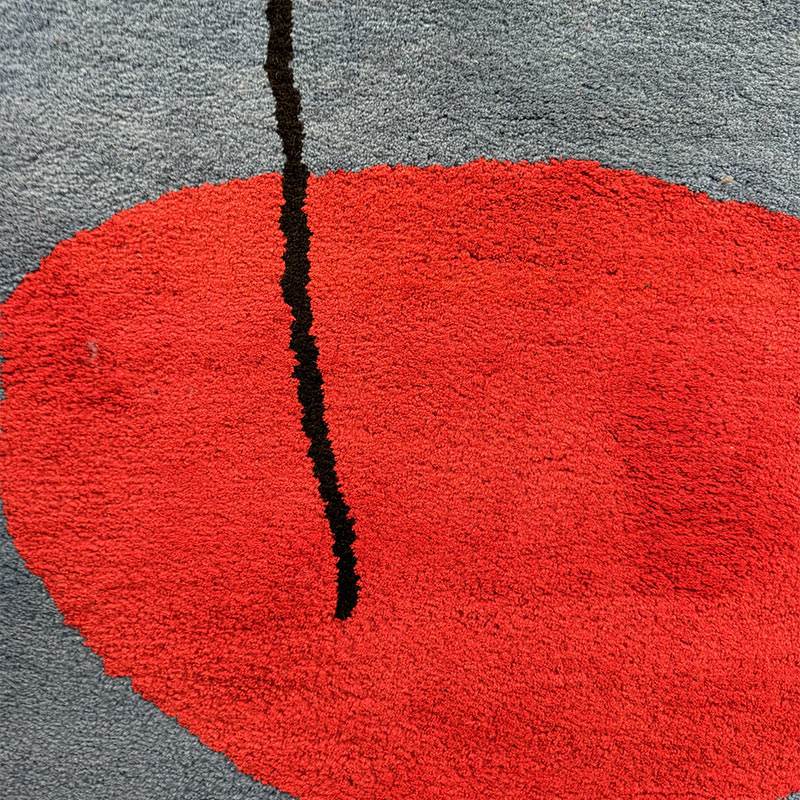
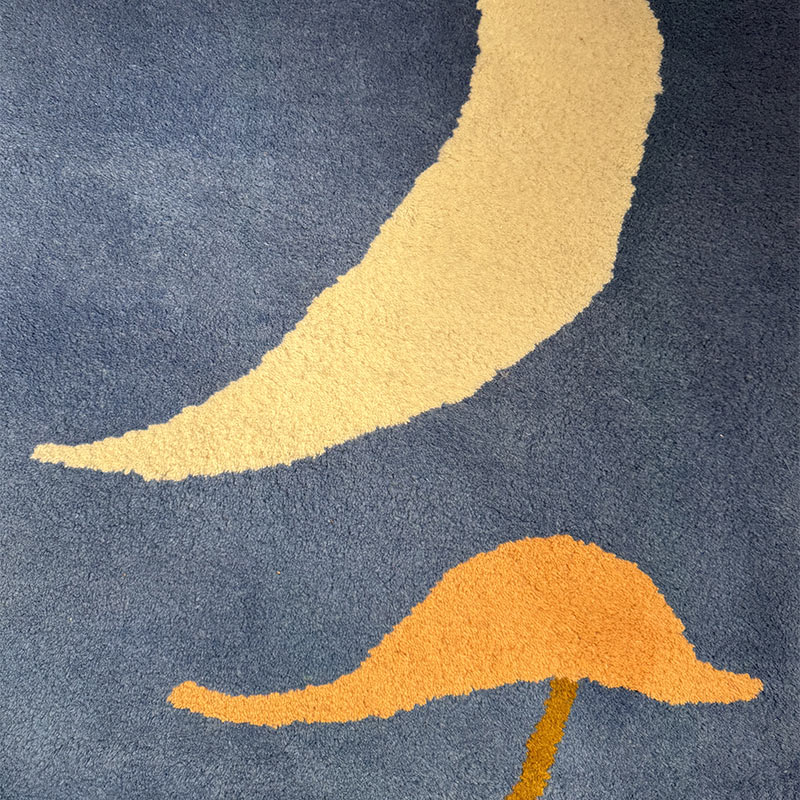
At the center of the composition is a vivid red circle that acts as the visual anchor of the design. Around it, thin black calligraphic lines extend across the surface like gestures in motion, suggesting the swirling movement of a flamenco dancer. Small accents of yellow and blue punctuate the composition, creating the bright, dreamlike color contrasts that are characteristic of Miró’s work.
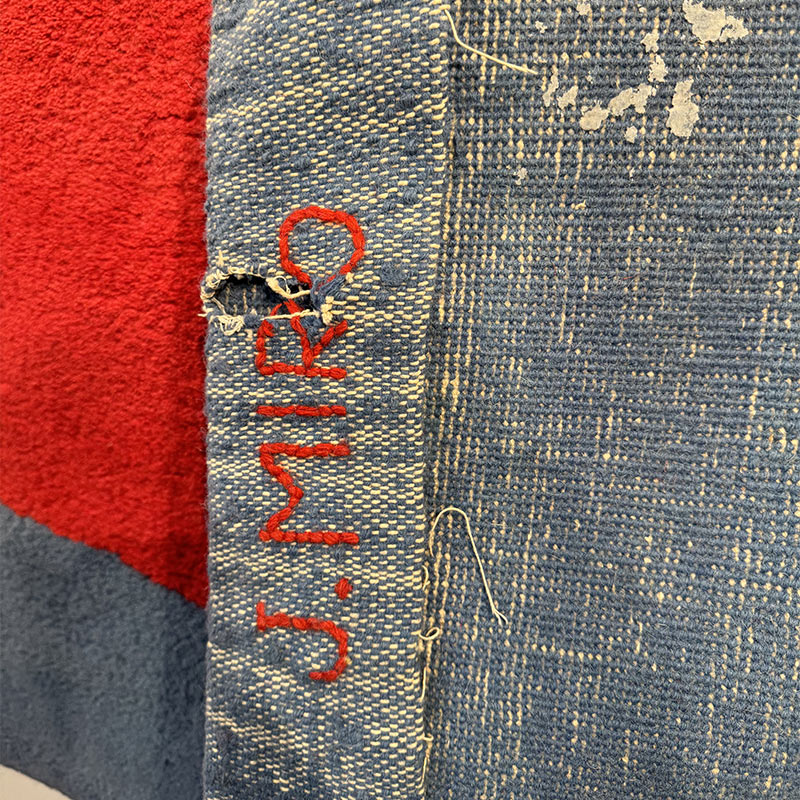
The rug was produced in Paris through the collaboration between Marie Cuttoli and Galerie Lucie Weill, whose workshops helped introduce modern artists to the medium of textile design. Miró worked closely with Cuttoli’s atelier and often provided full-scale cartoons for the weavers, ensuring that the rhythm of his lines and forms was faithfully preserved in wool.
Hand-knotted in wool and preserved in excellent condition, Danseuse Espagnole reflects the moment when Miró’s lyrical language of signs and symbols entered the decorative arts. The design transforms the floor into a field of movement, where a few simple forms evoke the energy of dance and the imagination of surrealism.