Design N.64
Artist: Albert Gleizes
Date: 1924 (after the original painting)
Dimensions: Customizable (original painting: 72 × 182 cm / 28 × 71.5 in.)
Material: Natural silk (customizable in wool, silk, or both)
Edition: Limited edition of 8
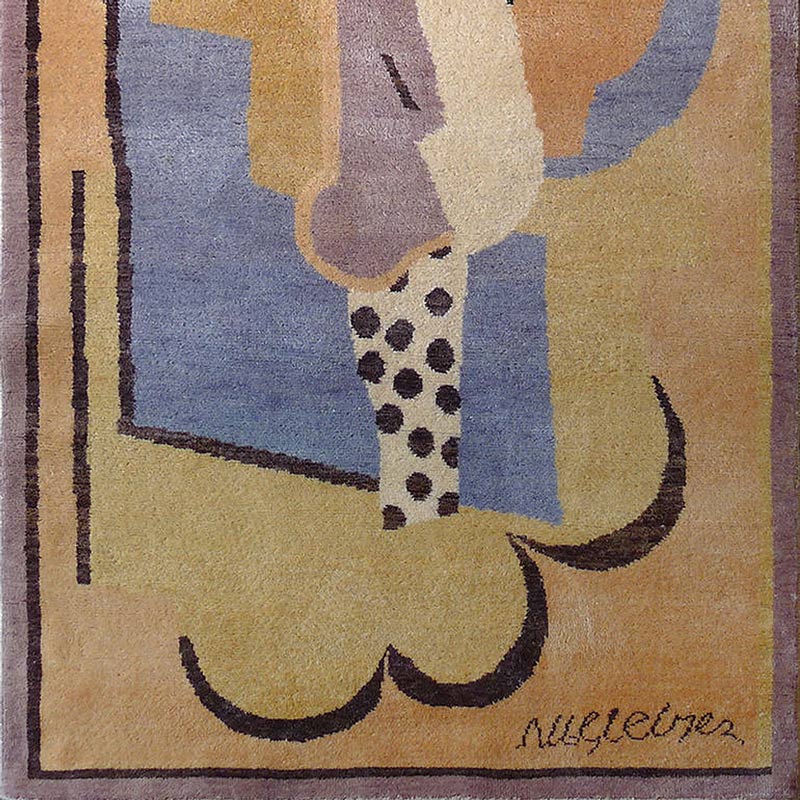
Signature: Woven signature and numbering, lower right
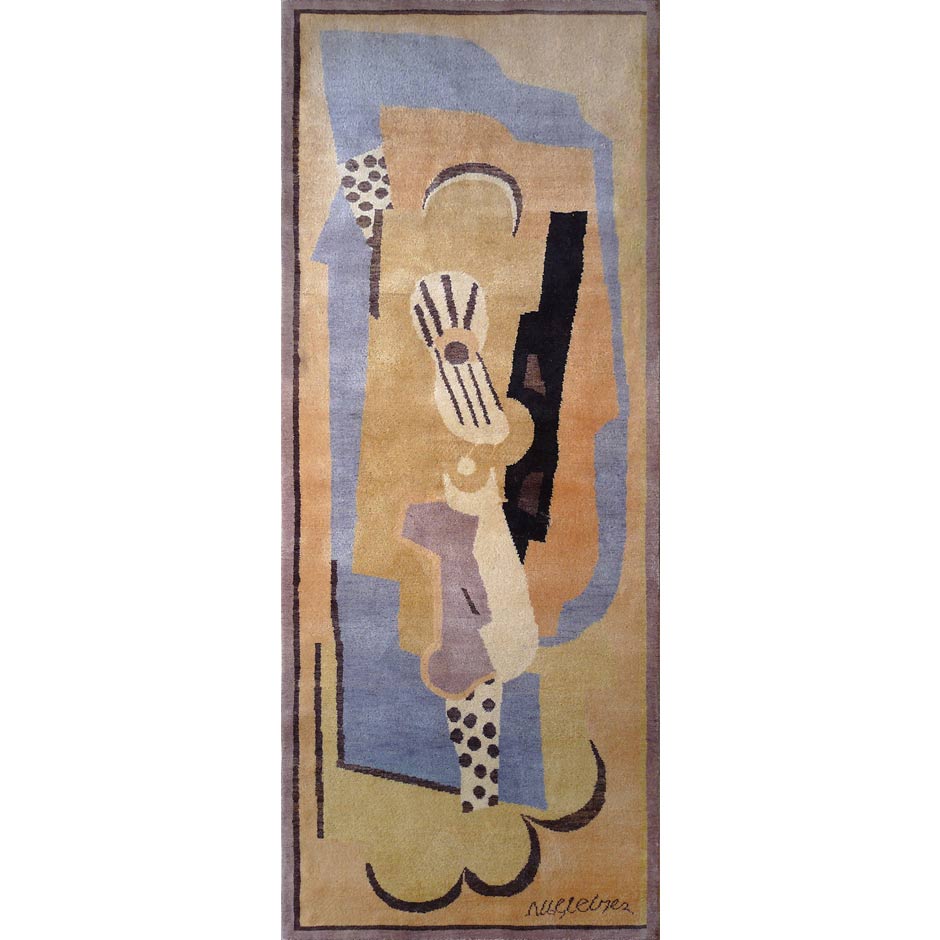
The Design N.64 rug is based on a 1924 painting by Albert Gleizes, a pivotal figure in the development of Cubism and a leading voice in the move toward structured abstraction. Created during a period when Gleizes was refining his theory of rhythmic composition, the original work reflects his interest in organizing space through movement, balance, and geometric clarity rather than direct representation.
The composition unfolds horizontally, with interlocking forms extending across the surface in a continuous visual progression. Rather than centering on a single focal point, Gleizes constructs a network of shifting planes that guide the eye from one element to the next. This sense of flow—both controlled and dynamic—is central to his work, creating a composition that feels both expansive and carefully ordered.
Translating this structure into a handwoven rug introduces a new dimension to the design. Executed in natural silk, the surface captures light with a subtle luminosity, enhancing the interplay between forms and reinforcing the rhythm of the composition. The material softens the geometry without diminishing its precision, allowing the work to maintain its architectural clarity while gaining a tactile presence.
Produced in a limited edition of eight by Atelier Boccara, the rug reflects a considered adaptation of Gleizes’s original painting. The woven signature and numbering are integrated into the lower right corner, consistent with the artist’s original placement, while maintaining the integrity of the composition. The work is documented in the Albert Gleizes Catalogue Raisonné (Somogy éditions d’Art, 1998, vol. I, p. 393), confirming its place within his body of work.
Customizable in material, dimensions, and color palette, Design N.64 allows for flexibility across different interiors while preserving the structural rhythm and visual continuity that define Gleizes’s approach to abstraction.