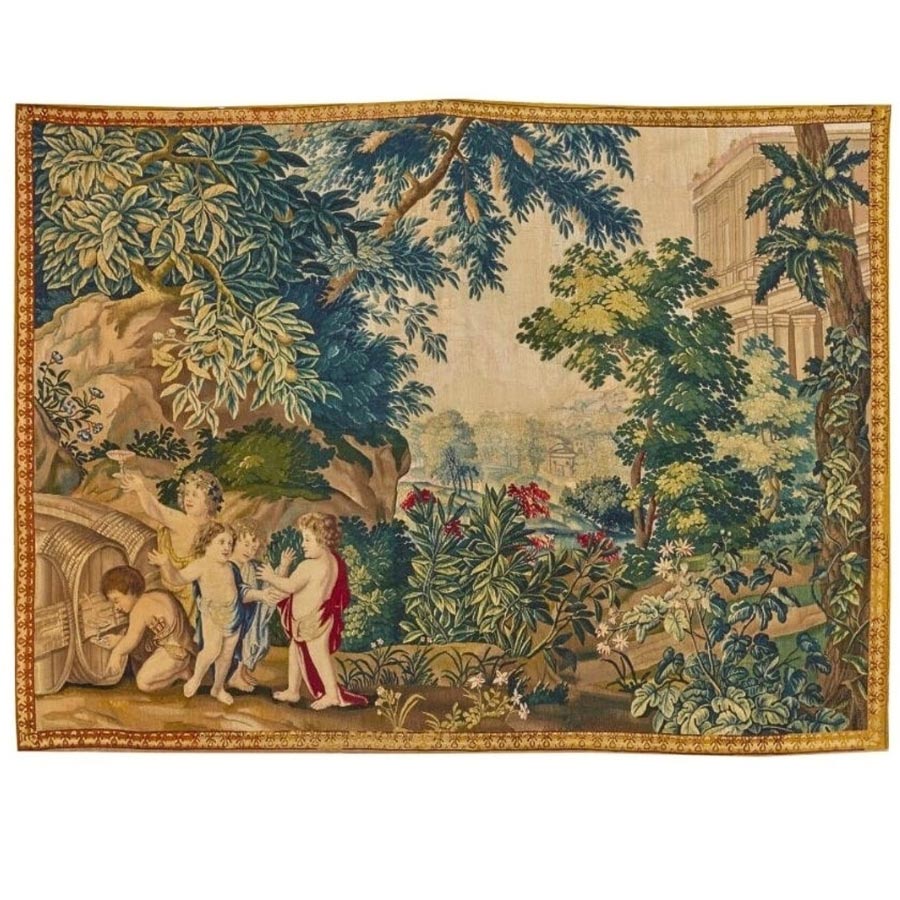

Late 17th–Early 18th Century Brussels Tapestry, Bacchanale d’Enfants
Dimensions: 89 x 122 in, 227 x 311 cm
Date: Late 17th-Early 18th Century
Material: Handwoven Wool and Silk Tapestry
Condition: Perfect
Provenance: Private French Collection
This Brussels Tapestry Bacchanale d’Enfants dates to the late 17th or early 18th century, when scenes of playful children became increasingly popular in Flemish weaving. Reflecting the graceful balance associated with works inspired by François Duquesnoy and designs after Charles Le Brun, the composition presents a gentle allegory of spring, abundance, and renewal.
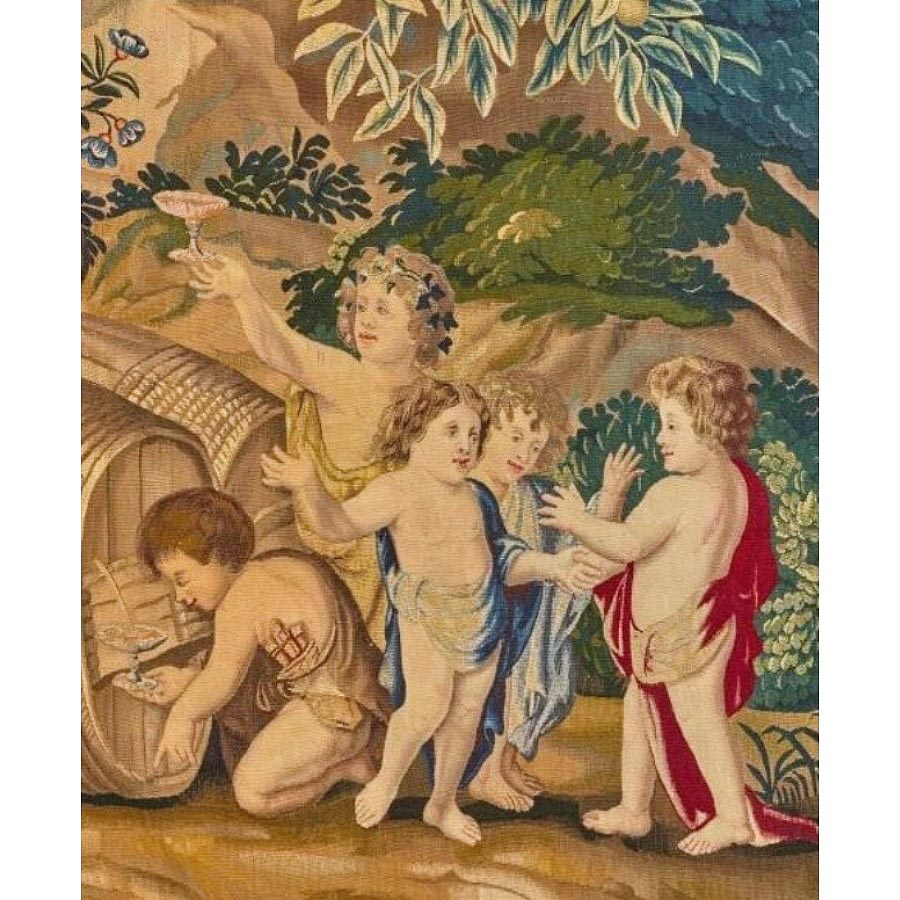
Five putti gather flowers and weave a garland, while two others guide a goat toward them, transforming the traditional Bacchanal into a scene of innocence and youthful delight. The figures are animated yet harmonious, their gestures flowing naturally within the pastoral setting. Subtle silk highlights enliven the blue and red garments, creating warmth and movement across the woven surface.
Behind them unfolds a mountainous landscape with a tranquil lake, a fortified town, and a stone bridge, providing atmospheric depth and narrative context. Lush foliage and vibrant red blossoms anchor the foreground, enhancing the sense of seasonal vitality.
The finely colored border overflows with garlands, cornucopias, musical instruments, playing cards, and dice, subtly alluding to innocent pleasures and games of youth. Such elaborate borders were a hallmark of Brussels workshops, integrating narrative imagery with decorative richness in a unified design.
The tapestry retains bright, vivid color and remains in excellent overall condition, with only minor wear visible in the silk passages. This Brussels Tapestry Bacchanale d’Enfants stands as a charming and well-preserved example of late Baroque craftsmanship at its peak.