17th Century Brussels Tapestry, Bacchanale d’Enfants (1680)
Dimensions: 118 x 118 in, 300 x 300 cm
Date: 17th Century (1680)
Material: Handwoven Wool and Silk Tapestry
Condition: Perfect
Provenance: Private French Collection
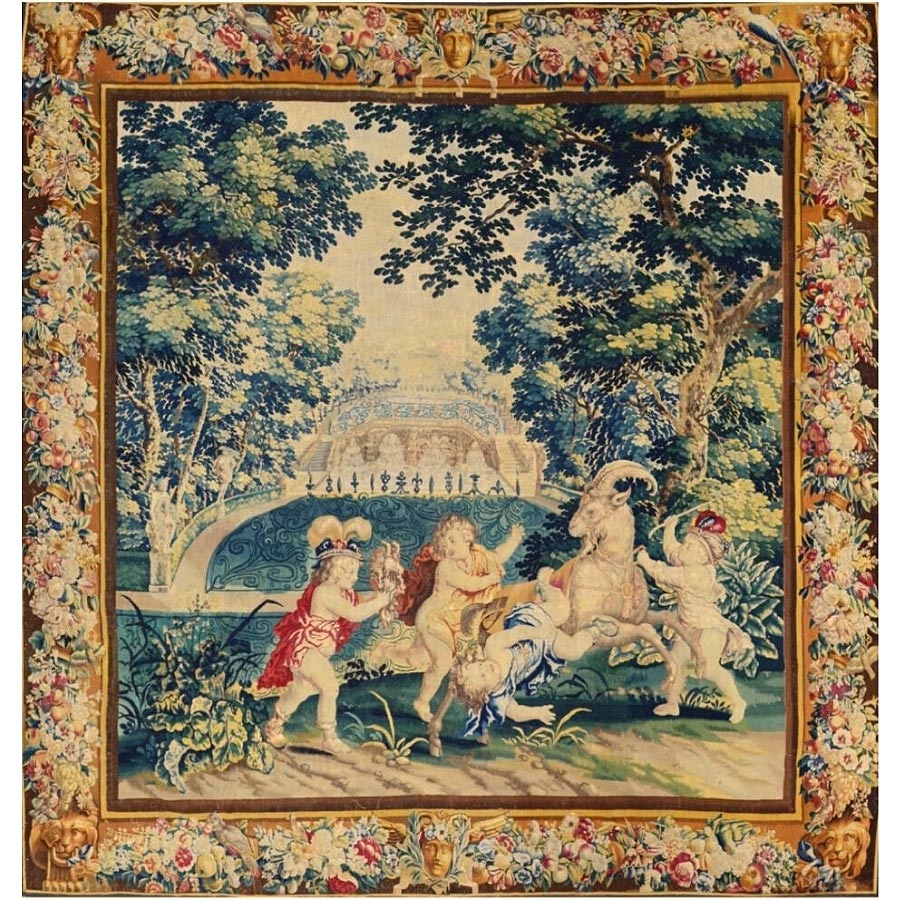
This 17th Century Brussels Tapestry Bacchanale d’Enfants (1680) reflects the late Baroque taste for lighter, more playful mythological subjects. Depicting a lively bacchanal of children in a lush pastoral setting, the composition balances movement, charm, and refined craftsmanship characteristic of Brussels weaving at its height.
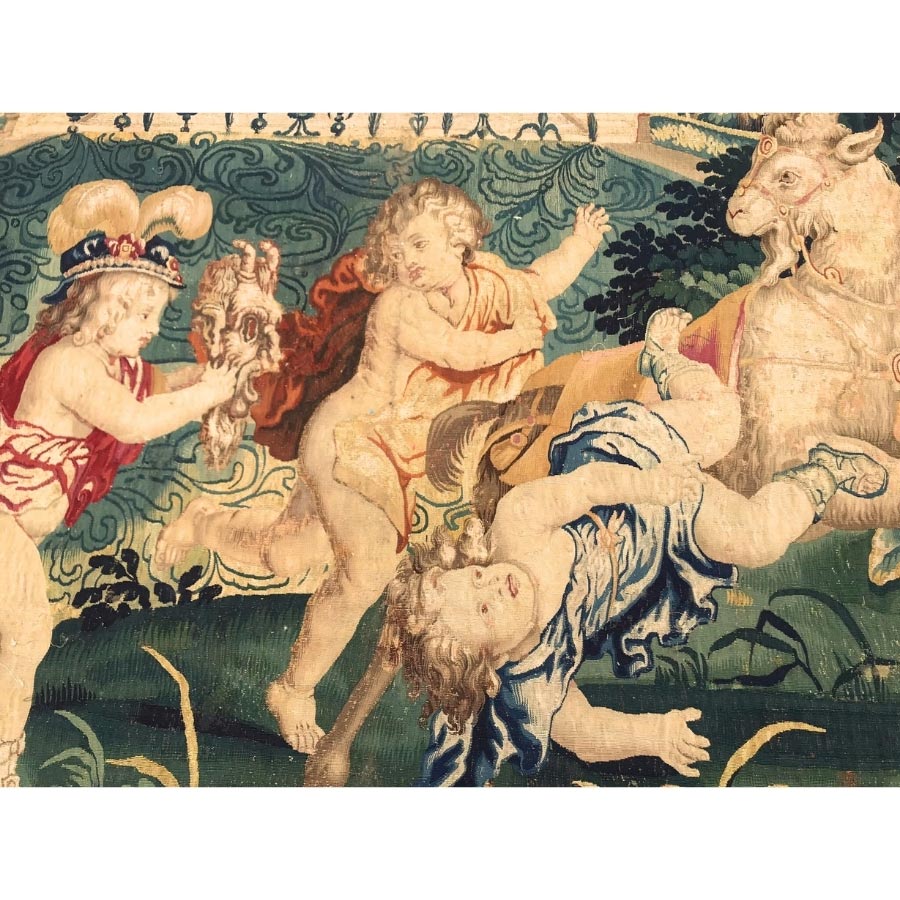
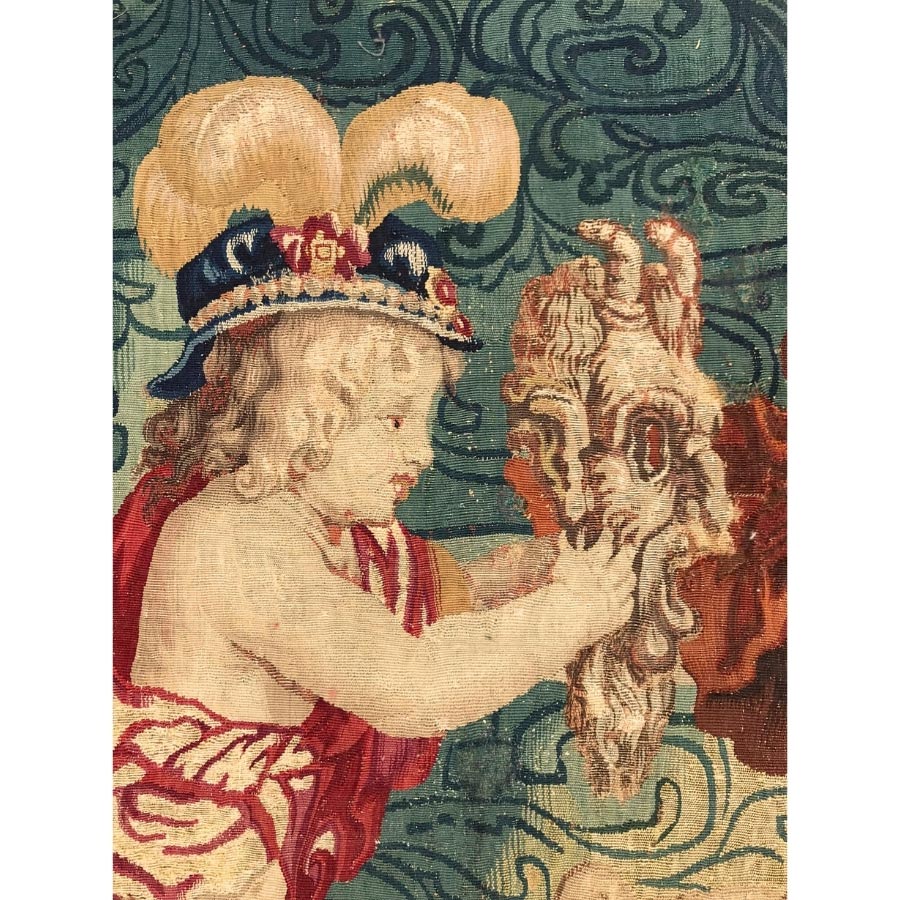
Set within a verdant landscape, the scene unfolds beneath a canopy of trees and before an elegant arched bridge that recedes gently into the distance. Putti engage in animated revelry: one child brandishes a Bacchic mask adorned with plumes, while another tumbles in playful motion near a goat, a traditional symbol of Bacchus and rustic vitality. The subject blends classical mythology with pastoral fantasy, celebrating youth, festivity, fertility, and the abundance of nature. Though playful in tone, the work carries symbolic resonance, referencing the civilizing transformation of untamed instinct into courtly grace — a theme frequently explored in Flemish tapestry workshops of the period.
The tapestry’s finely woven wool and silk threads create remarkable depth in foliage, drapery, and animated flesh tones. Subtle gradations of color model the figures with painterly sensitivity, while the carefully articulated landscape demonstrates the Brussels ateliers’ mastery of spatial illusion and atmospheric perspective. The luminous palette of greens, blues, warm ochres, and soft rose tones enhances the sense of vitality and seasonal warmth, reinforcing the joyful spirit of the scene.
Surrounding the central narrative is an elaborate floral border populated with blossoms, fruit, scrolling ornament, and expressive mask motifs. This richly detailed frame reinforces themes of celebration and abundance while anchoring the composition within the decorative traditions of late 17th-century Flemish design.
Works of this caliber exemplify the enduring appeal of 17th-century Brussels production, combining decorative richness with mythological elegance in a beautifully preserved and highly collectible example of Baroque craftsmanship.